

Table of Contents
As artificial intelligence becomes a regular part of business operations, companies are beginning to look beyond adoption and focus on results. Businesses are spending more on AI tools and technologies, but determining whether these investments deliver meaningful results can be difficult. While AI may help employees work more efficiently, measuring its direct impact on productivity and overall business performance requires clearer insights.
Anthropic aims to address this gap by introducing tools that help companies track AI usage, monitor expenses, and better understand the value they receive from their investments. By helping organizations understand where their money is going and what they are gaining in return, the company is encouraging a more transparent, results-driven approach to enterprise AI.
Moving Beyond Traditional Software Budgets
Historically, tracking the financial return on artificial intelligence tools has been challenging for company leaders. Standard platform dashboards often provide basic usage figures without enough context about task complexity, output quality, or team requirements. Consequently, many businesses struggle to connect their monthly platform expenses with measurable economic outcomes.
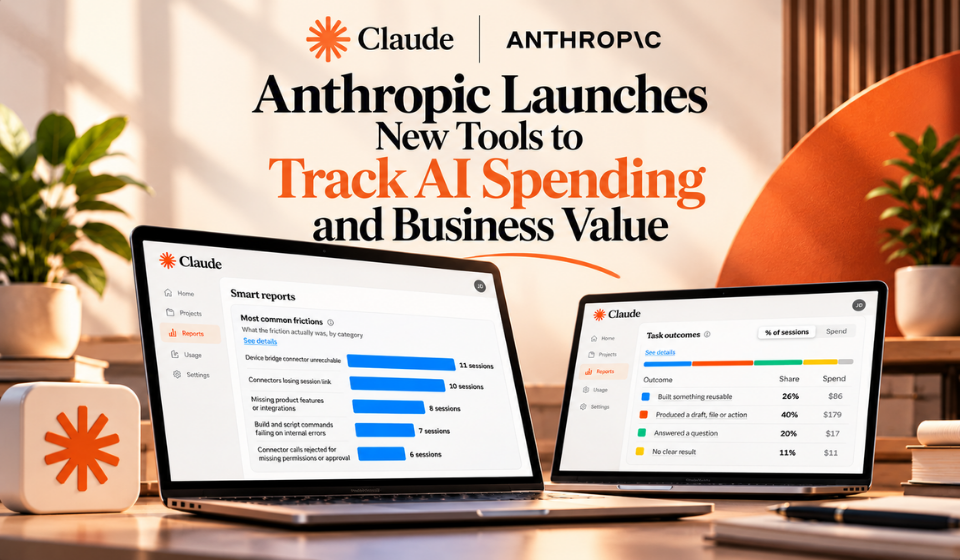
Anthropic’s new administrative tools aim to provide more useful operational insights. The management features help organizations understand resource consumption and make better decisions about their AI investments.
Key capabilities include:
- Comprehensive Usage Insights: Managers can access detailed reports to identify which prompts, team requests, and business workflows account for the highest AI resource consumption.
- Collective Team Budgets: Instead of restricting individual employees with rigid usage limits, managers can establish shared budgets that allow teams to distribute resources according to their requirements.
- In-Workflow Quality Surveys: Feedback mechanisms can help organizations understand employees’ experiences with AI-generated content, including its usefulness, accuracy, and contribution to productivity.
Connecting AI expenditure to measurable business outcomes enables leaders to assess how effectively their investments support organizational goals, including accelerating software development, streamlining research activities, and improving customer service response times.
Why Financial Visibility Matters Right Now
The introduction of these tools marks a significant development for businesses adopting AI and the software industry as a whole.
Organizations need more than basic spending reports to understand the effectiveness of their AI investments. They must identify which applications improve productivity, which workflows consume unnecessary resources, and where additional investment could deliver better results.
Businesses can maximize the benefits of Anthropic’s latest management tools by adopting two effective approaches.
1. Focus on Smarter AI Utilization: When AI costs increase, review usage patterns to identify unnecessary resource consumption instead of immediately restricting access to AI tools. Teams that rely on repeated prompts for routine tasks may benefit from better prompting techniques and improved automation practices.
2. Establish Flexible Departmental Budgets: Distribute AI spending allowances based on each department’s workload, project needs, and quarterly objectives instead of applying the same budget limits to every team. This allows organizations to allocate resources according to priorities such as product development and market research.
Strengthening Customer Retention
By incorporating spending controls and management analytics into its enterprise offerings, Anthropic can give businesses additional reasons to continue using its platform.
When organizations build their internal budgeting processes, usage reviews, and performance assessments around a particular AI provider, switching platforms may require additional planning and resources. Businesses might need to adjust existing workflows, retrain employees, and reconsider their reporting systems.
These factors can strengthen customer relationships, although long-term retention ultimately depends on product quality, pricing, security, and the value delivered to customers.
Practical Ways Companies Can Maximize Their Returns
Businesses can get greater value from Anthropic’s latest management features by implementing these practical strategies.
1. Improve Workflow Efficiency Before Cutting Costs: Instead of reducing AI usage whenever expenses rise, review spending reports to identify inefficient processes. Provide employees with training in effective prompting and AI workflow automation to reduce unnecessary usage.
2. Set Budgets Around Business Objectives: Create flexible team spending limits based on quarterly goals and project requirements, such as launching a new product or completing market research.
3. Combine Direct Feedback With Measurable Results: Compare employee feedback with performance indicators, including task completion times, output quality, and project progress. Evaluating these factors together can help businesses determine whether their AI tools deliver meaningful improvements.
Companies should also establish baseline performance measurements before introducing new AI applications. Comparing these figures with subsequent results makes it easier to identify genuine improvements and determine whether additional investment is justified.
Frequently Asked Questions
1. Will Anthropic Use Company Data to Train Its AI Models?
Data usage depends on the applicable product, agreement, and settings. Anthropic’s commercial offerings generally do not use business inputs and outputs to train its models by default, subject to applicable terms and exceptions. Organizations should review their specific contractual and privacy arrangements.
2. Can Managers Monitor AI Usage Across Their Teams?
Enterprise administration features can provide organizations with information about usage, resource consumption, and spending, depending on the product and available reporting capabilities. The precise level of visibility varies by plan and configuration.
3. Is Anthropic’s Management Toolkit Available to Individual Users?
These management capabilities are primarily intended for enterprise customers and eligible organizational plans, where businesses need centralized usage monitoring, coordinated budget management, and team-level oversight. Availability depends on the specific features and subscription.
4. What Advantages Do Shared Team Budgets Offer Over Individual Usage Limits?
Individual limits can interrupt employees when they reach their usage allowance, even when they are working on urgent projects. Shared budgets provide greater flexibility by allowing resources to be distributed according to team priorities, project requirements, and workload.
Conclusion
Anthropic’s focus on enterprise financial controls reflects a broader shift in how companies manage artificial intelligence. Businesses are moving beyond experimentation and looking for clear evidence that their technology investments support meaningful outcomes.
By turning AI usage data into actionable insights, Anthropic can help organizations better understand spending patterns, improve workflows, and make informed budgeting decisions. Companies that combine these insights with employee feedback and measurable performance indicators can develop more effective AI strategies.
As enterprise AI adoption continues to expand, successful implementation will depend not only on choosing capable models but also on understanding their costs, evaluating their results, and ensuring that technology investments contribute to long-term business goals.