
OpenAI’s GPT-5.5 Instant Sets a New Standard for Health-Related AI Assistance
Table of Contents
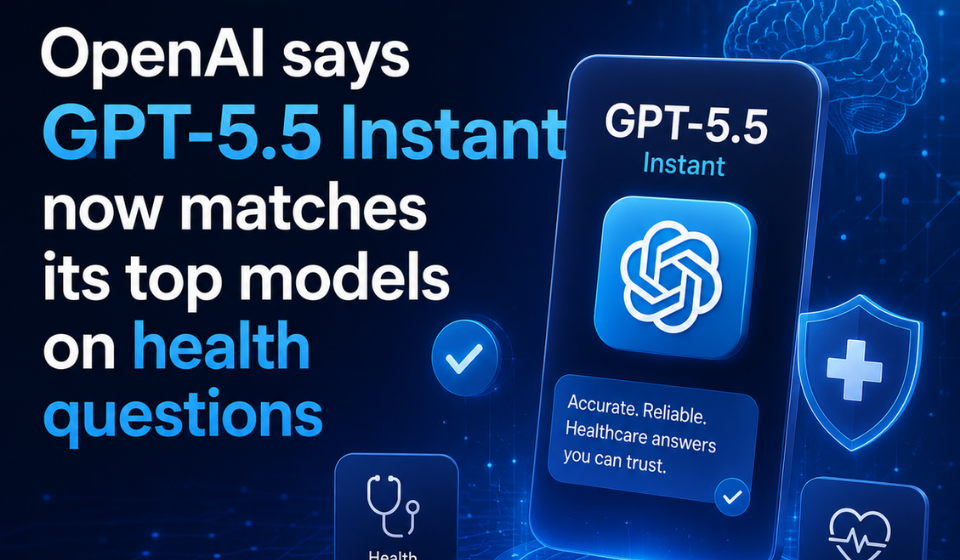
Artificial intelligence is becoming an increasingly common source of health information, with millions of people turning to AI tools for guidance on symptoms, wellness, and medical concerns. OpenAI has now announced a major milestone: GPT-5.5 Instant, its fast and widely accessible model, reportedly performs on health-related questions at a level comparable to the company’s most advanced AI systems.
This development is significant because health conversations require a careful balance of accuracy, clarity, and safety. OpenAI says the model has been refined with feedback from hundreds of physicians across dozens of medical specialties, helping it better recognize urgent situations, ask relevant follow-up questions, and communicate medical information in language that everyday users can understand.
Key Improvements in GPT-5.5 Instant
- Better recognition of potentially serious health situations
- More accurate and context-aware health responses
- Improved ability to acknowledge uncertainty
- Clearer explanations without excessive medical jargon
- Faster access for free and paid ChatGPT users alike
GPT-5.5 Instant Health Enhancements at a Glance
| Feature | Benefit to Users |
| Improved Accuracy | More reliable health-related answers |
| Physician Feedback Integration | Better alignment with real-world medical practices |
| Clear Communication | Easier-to-understand explanations |
| Better Context Gathering | More relevant follow-up questions |
| Enhanced Safety Awareness | Improved identification of urgent care situations |
OpenAI’s broader research also highlights substantial reductions in inaccurate and hallucinated responses across high-stakes areas such as healthcare, law, and finance. Internal testing found GPT-5.5 Instant produced significantly fewer factual errors compared with earlier versions.
Why This Matters
Healthcare remains one of the most promising applications of AI. Many people use AI as a first step to understand symptoms, prepare for doctor visits, or learn about treatment options. By improving the quality and safety of health-related responses, OpenAI aims to make AI assistance more useful while still emphasizing that these tools are not a replacement for professional medical care.
As AI becomes more integrated into daily life, advancements like GPT-5.5 Instant demonstrate how intelligent systems can provide faster and more accessible health information while maintaining a stronger focus on accuracy and user safety.
Final Thoughts
OpenAI’s latest update signals a growing commitment to healthcare-focused AI. With GPT-5.5 Instant now approaching the performance of frontier-level models on health questions, users can expect more reliable, understandable, and context-aware assistance. While AI should never replace qualified healthcare professionals, it is increasingly becoming a valuable companion for learning, guidance, and informed decision-making in everyday health situations.