

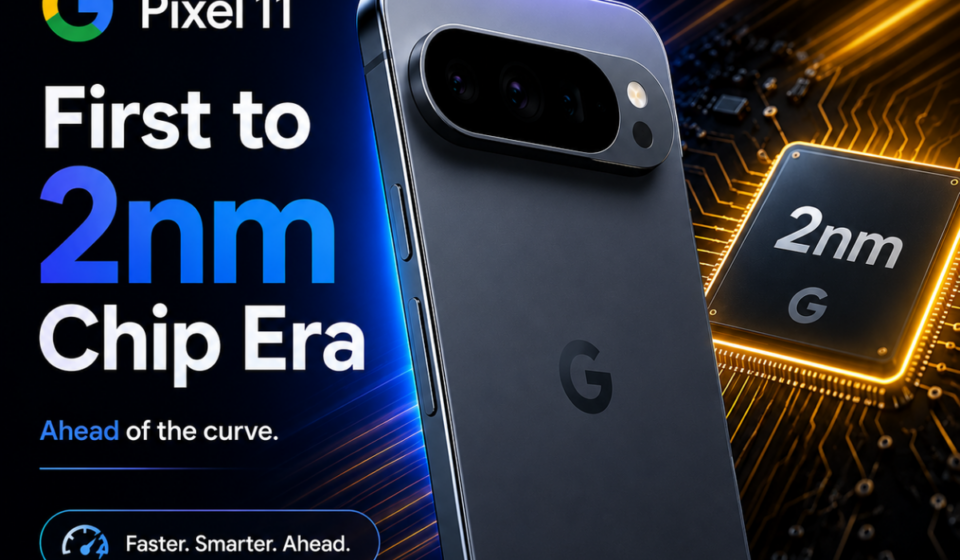
Google Pixel 11 Set to Beat Apple with First 2nm Chip: A New Era for Smartphone Performance
Table of Contents
Google is reportedly preparing to make smartphone history with the upcoming Pixel 11. According to recent reports, the device could become the first mainstream smartphone to feature a 2-nanometer (2nm) processor, beating Apple’s next-generation iPhone to one of the biggest technological advancements in mobile computing. If the reports prove accurate, Google’s upcoming flagship could mark a significant milestone in the ongoing competition between Android and iPhone devices.
The Pixel 11 is expected to debut with Google’s Tensor G6 chipset, reportedly manufactured by TSMC using its advanced 2nm fabrication process. This would represent a major leap over the current generation of smartphone processors and could deliver noticeable improvements in speed, efficiency, and artificial intelligence capabilities.
What Is a 2nm Chip?
The term 2nm chip refers to a new generation of semiconductor manufacturing that allows engineers to pack more transistors into the same silicon area. Although “2nm” is primarily a process-node label rather than a literal measurement, the technology generally enables better performance while reducing power consumption compared to previous generations.
For smartphone users, this translates into several practical benefits:
- Faster app launches
- Improved multitasking
- Better gaming performance
- Longer battery life
- Reduced heat generation
- More efficient AI processing
As mobile devices continue to rely heavily on artificial intelligence, these improvements are becoming increasingly important.
Tensor G6 Could Be Google’s Biggest Upgrade Yet
Google introduced its custom Tensor processors with the Pixel 6 lineup and has steadily refined them with each new generation. The upcoming Tensor G6 is expected to be Google’s most advanced mobile processor to date, representing the company’s transition from Samsung-based manufacturing to TSMC’s cutting-edge fabrication technologies.
Rather than focusing solely on benchmark numbers, Google traditionally optimizes Tensor chips for real-world experiences such as:
- AI-powered photography
- Live language translation
- Voice recognition
- On-device machine learning
- Smart battery optimization
A 2nm Tensor G6 could significantly improve these features while consuming less power.
Beating Apple to the Next Generation
Apple has long been recognized as a leader in mobile chip innovation. However, reports suggest Google’s Pixel 11 may arrive with a 2nm processor before Apple’s next flagship iPhone, potentially giving Google an early advantage in adopting the latest semiconductor technology.
While Apple is also expected to transition to 2nm chips in a future iPhone generation, Google’s earlier adoption could strengthen the Pixel brand among Android enthusiasts looking for cutting-edge hardware.
That said, chip manufacturing alone does not determine smartphone performance. Software optimization, thermal management, and AI integration also play crucial roles in the overall user experience.
Why It Matters for Everyday Users
Although processor announcements often focus on technical specifications, the real impact is felt during everyday use.
A more efficient chipset could allow users to:
- Keep multiple apps running smoothly
- Edit photos and videos faster
- Enjoy longer battery life
- Experience quicker AI-powered features
- Reduce charging frequency
- Improve overall device responsiveness
For Pixel users who rely on Google’s AI-powered tools, these gains could make everyday interactions feel noticeably smoother.
Expected Launch Timeline
Google has already confirmed its Made by Google event for August 12, 2026, where the Pixel 11 series is widely expected to be unveiled. Reports indicate the lineup may include the standard Pixel 11, Pixel 11 Pro, Pixel 11 Pro XL, and Pixel 11 Pro Fold.
While Google has not officially confirmed the Tensor G6 specifications, multiple industry reports point toward the adoption of TSMC’s 2nm manufacturing process.
Competition in the Premium Smartphone Market
The premium smartphone market has become increasingly competitive, with manufacturers investing heavily in AI, cameras, battery efficiency, and custom silicon.
Google’s move toward a 2nm processor signals its ambition to compete more aggressively with Apple, Samsung, and other flagship brands. Instead of simply increasing raw processing power, Google continues to emphasize intelligent software experiences powered by its Tensor platform.
If the Tensor G6 delivers the expected efficiency improvements, the Pixel 11 could become one of the most compelling Android smartphones of the year.
Final Thoughts
The rumored arrival of a 2nm Tensor G6 chip in the Google Pixel 11 represents more than just a hardware upgrade. It reflects Google’s continued investment in custom silicon and AI-driven mobile experiences. By potentially becoming the first smartphone maker to launch a device powered by a 2nm processor, Google could gain an important technological advantage ahead of Apple’s next iPhone.
While official specifications remain unconfirmed until Google’s launch event, the early reports have generated significant excitement. If the Pixel 11 delivers on its promises of improved performance, better battery life, and faster AI processing, it may set a new benchmark for Android smartphones in 2026.