

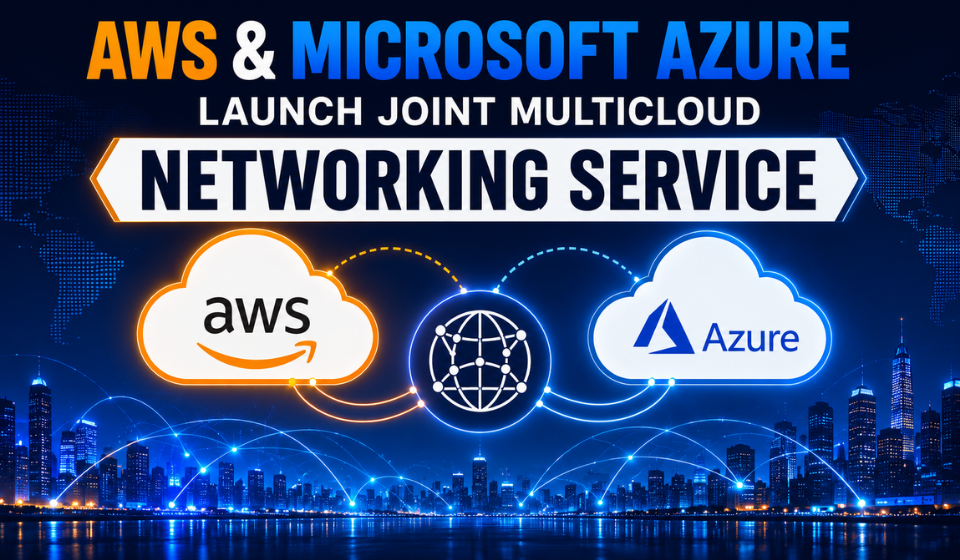
AWS and Microsoft Azure Launch New Multicloud Networking Solution
Table of Contents
AWS and Microsoft Azure have announced a new multicloud networking solution designed to simplify private connectivity between workloads running across the two cloud platforms.
The collaboration combines AWS Interconnect – multicloud with Azure Multicloud Interconnect, allowing customers to establish dedicated connections between AWS and Azure through a more streamlined process. The service entered Public Preview on August 31, 2026, and is initially available in four regions.
The announcement is notable because AWS and Microsoft Azure are major competitors in the cloud computing market. However, the collaboration reflects growing demand from enterprises that operate workloads across multiple cloud platforms and need simpler ways to connect them.
AWS and Microsoft Azure Simplify Multicloud Connectivity
Connecting workloads across different cloud providers has traditionally required organisations to manage multiple networking components, physical connections and routing configurations.
In some cases, building multicloud connectivity could involve lengthy planning and manual provisioning processes.
The new AWS and Microsoft Azure offering is designed to reduce this complexity by allowing customers to establish private cloud-to-cloud connectivity through an integrated and more automated experience.
Customers can create connections using AWS Interconnect – multicloud, while Azure Multicloud Interconnect provides the corresponding experience on the Microsoft side.
The aim is to simplify provisioning and reduce the operational work involved in connecting applications and infrastructure that span both cloud environments.
Public Preview Begins in Four Regions
The new connectivity service is currently available in Public Preview in four locations:
| Region | Location |
| US East | N. Virginia |
| US West | N. California |
| Asia Pacific | Sydney |
| Europe | Frankfurt |
AWS and Microsoft have said that they plan to expand availability over time. For now, however, the Azure integration remains in Public Preview, meaning features and availability may change before a wider release.
Private Connectivity With Built-In Resilience
The service is designed to provide private connectivity between AWS and Azure rather than routing traffic through the public internet.
AWS describes its multicloud networking architecture as using resilient infrastructure designed to support reliable cloud-to-cloud connections. The joint architecture includes a quad-redundant design across physically diverse infrastructure.
MACsec encryption is used to protect data in transit across the relevant physical network connections between cloud edge routers.
The combination of private networking, redundancy and encryption is intended to provide enterprises with a more secure and resilient way to connect workloads operating across multiple cloud environments.
Faster Provisioning Reduces Multicloud Complexity
One of the main advantages of the new offering is the simplified provisioning process.
Previously, organisations often had to build multicloud connections through a do-it-yourself approach involving physical networking, routing protocols and other manually managed components.
AWS says its Interconnect – multicloud service can simplify this process through a cloud-managed configuration experience. Customers can select a target cloud provider, choose a destination region and select the required bandwidth rather than managing every underlying networking component themselves.
The new collaboration with Microsoft extends this approach to Azure workloads, making it easier for organisations that operate infrastructure across both platforms to establish private connectivity.
Azure Joins AWS’s Broader Multicloud Connectivity Approach
AWS first introduced its Interconnect – multicloud framework at re 2025 and published an open specification for network interoperability.
The framework was designed to allow cloud providers to adopt a common approach for establishing managed connectivity between their platforms.
With Microsoft Azure joining the framework in Public Preview, AWS Interconnect – multicloud now supports connectivity involving Azure, alongside existing integrations with Google Cloud and Oracle Cloud Infrastructure.
However, the availability status and supported capabilities can differ between cloud providers. Organisations should therefore check the specific availability and technical requirements for the cloud environments they plan to connect.
High-Bandwidth Connectivity for Data-Intensive Workloads
Microsoft has said that the service is designed to support connectivity speeds of up to 100 Gbps from day one of general availability.
This distinction is important because the AWS and Azure integration is currently in Public Preview. The 100 Gbps figure relates to the planned general availability capability rather than necessarily representing the full capacity currently available to every preview customer.
High-bandwidth cloud-to-cloud connectivity may be useful for organisations managing large data transfers, distributed applications and data-intensive workloads.
AI workloads could also benefit where organisations need to move data or connect computing resources across multiple cloud environments. However, the networking service is not designed exclusively for AI and can support a broader range of enterprise workloads.
Why AWS and Microsoft Azure Are Working Together
Many large organisations now use more than one cloud provider.
A business may use AWS for some applications and Microsoft Azure for others, creating a need for secure and reliable connectivity between the two environments.
Building and maintaining these connections can increase networking complexity, particularly when workloads operate across different regions and cloud platforms.
The collaboration between AWS and Microsoft Azure addresses this challenge by providing a more standardised approach to private multicloud networking.
Rather than suggesting a broader strategic alignment between the two companies, the partnership primarily reflects enterprise demand for easier interoperability between cloud platforms.
What Happens Next?
AWS and Microsoft have indicated that they plan to expand the availability and capabilities of the multicloud networking service.
The longer-term vision for AWS Interconnect – multicloud also extends beyond direct cloud-to-cloud connections. AWS’s open interoperability specification could allow additional cloud providers, network service providers and telecommunications companies to participate in the future.
For now, the AWS and Microsoft Azure integration remains in Public Preview and is limited to the initial four locations.
FAQs
What is the new AWS and Microsoft Azure networking solution?
It is a multicloud networking solution that allows customers to establish private connectivity between AWS and Microsoft Azure through AWS Interconnect – multicloud and Azure Multicloud Interconnect.
Is the AWS and Azure service generally available?
No. The AWS and Microsoft Azure integration is currently in Public Preview.
Where is the Public Preview available?
The initial locations are US East (N. Virginia), US West (N. California), Asia Pacific (Sydney) and Europe (Frankfurt).
How fast will the connectivity be?
Microsoft has stated that the service is designed to support speeds of up to 100 Gbps from day one of general availability. Preview capabilities may differ.
Can the service support AI workloads?
Yes, multicloud connectivity may be useful for data-intensive and AI workloads that operate across multiple cloud environments. However, the service is designed for a wider range of enterprise workloads.
Conclusion
The collaboration between AWS and Microsoft Azure represents an important development in multicloud networking.
By combining their respective multicloud connectivity services, the companies aim to reduce the complexity of establishing private connections between two major cloud platforms.
The integration remains in Public Preview and is currently available in four locations. However, its focus on simplified provisioning, private connectivity, built-in resilience and future high-bandwidth capabilities could make it increasingly useful for organisations operating workloads across multiple cloud environments.
As multicloud strategies continue to grow, the collaboration reflects increasing enterprise demand for simpler and more standardised interoperability between major cloud platforms.