

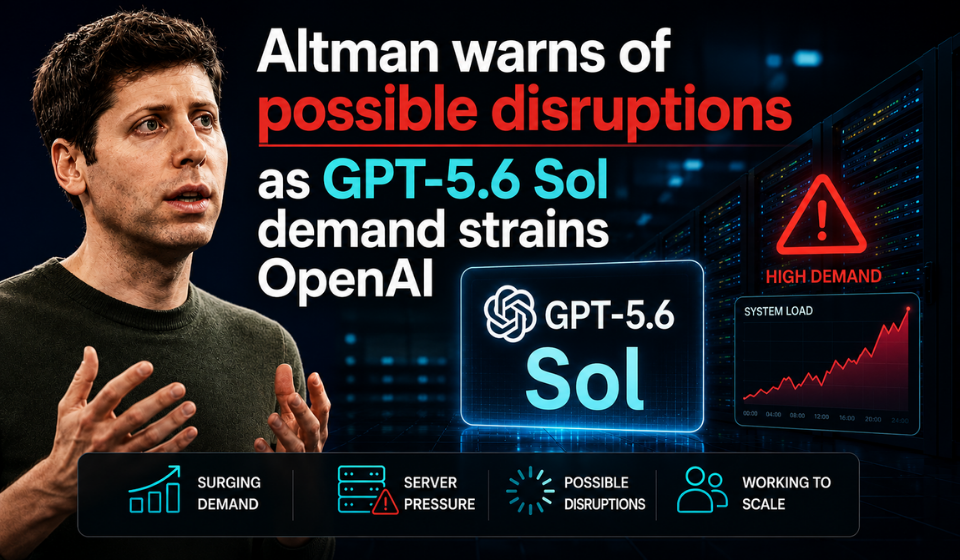
Sam Altman Signals Possible Short-Term Service Delays as GPT-5.6 Sol Drives Unprecedented Demand
Table of Contents
OpenAI is preparing for a sharp increase in platform usage following the introduction of GPT-5.6 Sol, its latest flagship AI model. CEO Sam Altman has indicated that the level of interest has been far greater than anticipated, warning that users may occasionally experience slower performance or brief service interruptions while additional computing resources are brought online.
Rather than pointing to a problem with the model itself, the warning reflects the enormous amount of computing power required to serve millions of requests from developers, businesses, and individual users. As adoption continues to rise, OpenAI is expanding its infrastructure to ensure GPT-5.6 Sol remains stable and responsive over the long term.
The announcement demonstrates the growing popularity of advanced AI systems and the operational challenges that accompany large-scale model launches.
Key Highlights
Recent updates from OpenAI indicate:
- GPT-5.6 Sol is attracting exceptionally strong interest worldwide.
- OpenAI expects periods of unusually high platform activity during the rollout.
- Users could experience temporary slowdowns while capacity is expanded.
- The company is investing in additional AI infrastructure to support future demand.
- Service performance is expected to improve as new computing resources become available.
Rollout Overview
| Category | Details |
| AI Model | GPT-5.6 Sol |
| Current Situation | Rapid increase in user demand |
| Possible User Impact | Temporary response delays during peak usage |
| OpenAI’s Focus | Expanding compute capacity and system reliability |
| Long-Term Goal | Deliver consistent performance at global scale |
Why Demand Is Creating New Challenges
The release of increasingly capable AI models brings more than just technological improvements—it also places significant pressure on the infrastructure that powers them. Every interaction with a modern AI system requires substantial computing resources, and usage often rises dramatically when a new flagship model becomes available.
To address this growth, OpenAI is scaling its hardware and cloud infrastructure so it can handle larger workloads without compromising reliability. The company has emphasized that short-term performance fluctuations are a result of extraordinary demand rather than issues with GPT-5.6 Sol itself.
The situation highlights a broader trend across the AI industry: as adoption accelerates, infrastructure investment is becoming just as critical as model innovation.
What Users May Notice
During the expansion period, users could encounter:
- Slightly slower response times during busy hours.
- Temporary limits when demand reaches peak levels.
- Ongoing improvements as additional computing resources are deployed.
- Increased system stability over time as infrastructure continues to scale.
- A smoother experience once the rollout reaches full capacity.
Key Takeaways
- GPT-5.6 Sol is generating exceptionally high interest among users and developers.
- Sam Altman has cautioned that temporary performance issues may occur during periods of heavy demand.
- OpenAI is expanding its computing infrastructure to accommodate rapid growth.
- The challenges are linked to increased adoption rather than model performance.
- Continued infrastructure investments are expected to improve reliability as more users gain access.
Final Thoughts
The strong response to GPT-5.6 Sol underscores how quickly advanced AI is becoming part of everyday workflows across industries. As demand reaches new highs, AI providers face the complex task of balancing innovation with the infrastructure needed to support millions of users. OpenAI’s decision to communicate these challenges in advance reflects the realities of operating large-scale AI services and highlights the importance of continued investment in computing capacity as the technology continues to evolve.