


Table of Contents
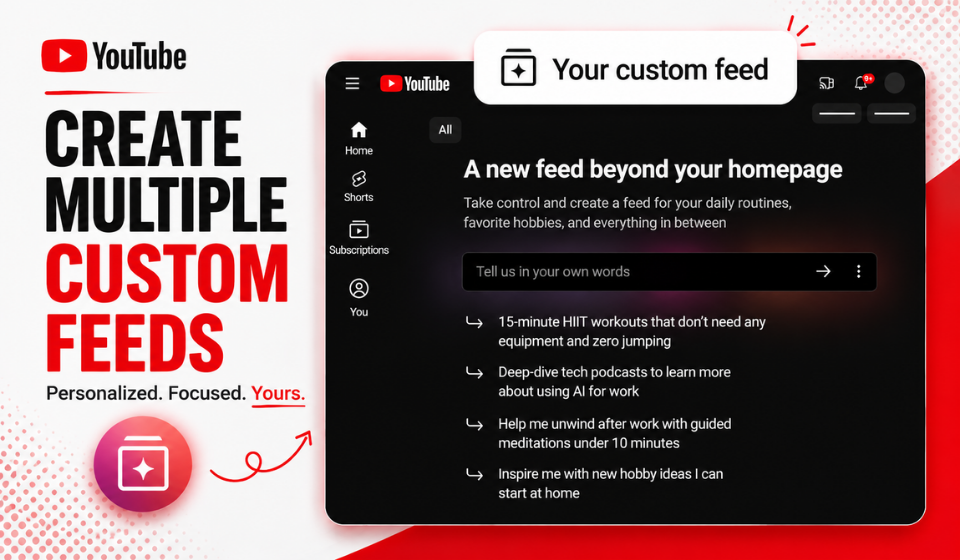
YouTube is expanding its YouTube custom feed AI experiment, giving eligible users more control over the type of videos recommended on their Home page. The latest update allows participants in the test to create and save multiple personalised feeds based on text prompts, making it easier to explore different interests from one place.
The update builds on YouTube’s earlier experiments with prompt-based content recommendations. The platform first began testing custom feeds in November and expanded the experiment to more users in May. The latest development introduces the ability to build and switch between multiple custom feeds.
Users Can Create Up to Eight Custom Feeds
The biggest addition to the YouTube custom feed AI experiment is the ability to maintain multiple personalised feeds.
Users included in the experiment can create feeds by entering text prompts describing the type of videos they want to explore. These feeds are pinned near the top of the Home page, allowing viewers to switch between different interests more easily.
The experiment supports up to eight active feeds per user at one time. YouTube has also indicated that inactive prompts may expire after a period of inactivity, meaning unused custom feeds may eventually need to be recreated.
| Features | How It Works |
| Custom feeds | Created using text prompts |
| Active feed limit | Up to eight feeds in the experiment |
| Feed access | Available from the top of the Home page |
| Prompt editing | Users can adjust prompts to change recommendations |
| Inactive prompts | May expire after a period of inactivity |
Users Can Edit Prompts to Refine Recommendations
Another part of the update allows users to edit the prompts used to create their feeds.
A text box appears at the top of a custom feed, enabling users to modify their request and adjust the focus of the recommendations. This means viewers can refine an existing feed instead of necessarily starting from scratch when their interests change.
For example, a user who initially creates a feed for a broad topic could later make the prompt more specific to focus on a particular type of video.
The feature reflects the growing use of conversational prompts as a way to interact with AI-powered services.
Custom Feeds Replace Topic Chips for Mobile Test Participants
As part of the experiment, YouTube’s custom feeds will replace the standard topic chips at the top of the Home feed for participating users on the mobile app.
Topic chips typically allow users to select broad categories and narrow the content displayed on their Home page. The custom feed approach provides a more flexible option by allowing users to describe their interests using natural language.
However, this change should be viewed as part of the ongoing experiment and not as confirmation that YouTube is permanently removing topic chips from its platform.
Combining User Prompts With Recommendation Signals
The YouTube custom feed AI experiment represents a different approach to content discovery.
YouTube’s traditional recommendations are heavily influenced by signals generated through user activity, such as viewing and engagement behaviour. Custom feeds add another layer by allowing users to provide direct input about the type of content they want to explore.
The experiment does not mean YouTube is abandoning its existing recommendation technology. Instead, the updated approach is testing how direct user instructions can work alongside other signals to create a more relevant and personalised Home feed experience.
Videos watched through a custom feed can still be added to a user’s standard watch history, meaning that activity may influence recommendations elsewhere on YouTube.
Where Is the Feature Available?
The expanded experiment is being rolled out to selected signed-in viewers in the United States.
According to the available information, the experiment is available across:
- Android
- iOS
- Desktop
The feature remains an experiment and is not yet available to all YouTube users globally. YouTube has also not announced when, or whether, the expanded custom feed system will become generally available.
Frequently Asked Questions
What is YouTube custom feed AI?
YouTube custom feed AI is an experimental feature that allows eligible users to create personalised video feeds by entering text prompts describing the type of content they want to watch.
How many custom feeds can users create?
The expanded experiment allows users to maintain up to eight active custom feeds at a time.
Can users edit a YouTube custom feed?
Yes. Users can edit the text prompt associated with a custom feed to adjust the focus of its recommendations.
What happens to inactive custom feeds?
Prompts associated with custom feeds may expire after a period of inactivity. YouTube’s custom feed documentation also states that expired prompts can result in the associated custom feed no longer being available.
Does YouTube custom feed AI replace YouTube’s recommendation algorithm?
No. The experiment should not be interpreted as YouTube abandoning its recommendation systems. Instead, it gives users another way to provide direct input about their interests while YouTube continues testing how those preferences can work alongside other recommendation signals.
Where is YouTube custom feed AI available?
The expanded experiment is being tested with selected signed-in users in the United States across mobile and desktop platforms. Availability remains limited because the feature is still being tested.
How can custom feeds affect video discovery?
Custom feeds give users another way to guide video discovery by directly describing the type of content they want to see. YouTube is testing whether this direct input, alongside other recommendation signals, can create a more relevant Home feed experience.
Conclusion
The expansion of the YouTube custom feed AI experiment gives users a more direct way to influence what they discover on YouTube. By allowing participants to create up to eight prompt-based feeds, edit their preferences and switch between different areas of interest, the platform is testing a more conversational approach to content recommendations.
Importantly, the experiment does not signal that YouTube is replacing its recommendation algorithm with user prompts. Instead, it explores how explicit preferences entered by users can work alongside the platform’s existing recommendation signals.
As YouTube continues testing the feature with selected users in the United States, the experiment could offer a clearer example of how AI-powered prompts may give viewers more control over personalised content discovery.