


Table of Contents
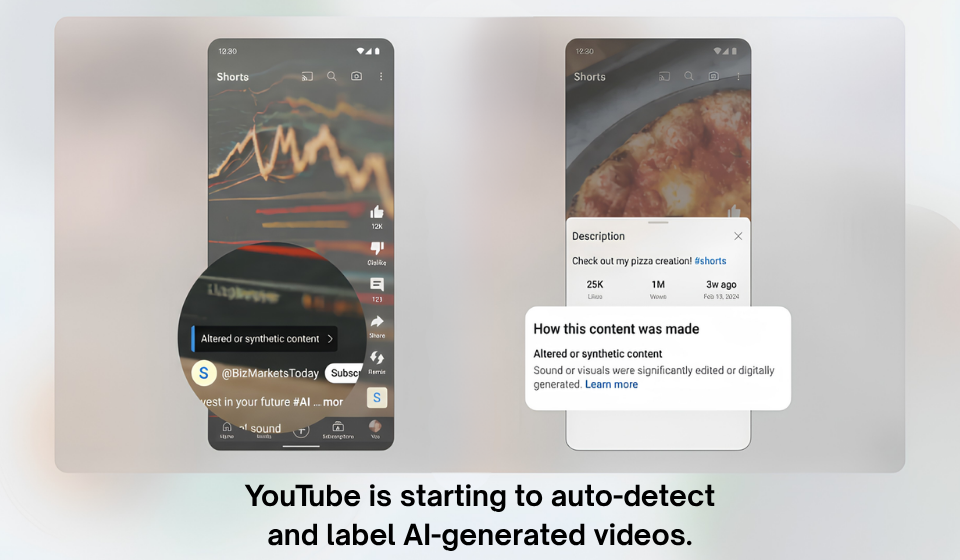
YouTube is entering a new phase of content moderation by introducing automated systems that can identify and label AI-generated or AI-edited videos. As artificial intelligence becomes deeply integrated into video creation, this update is designed to bring clarity and trust back to what viewers see on the platform.
Rather than treating AI content as a threat, YouTube is focusing on transparency—ensuring audiences can clearly distinguish between authentic footage and synthetic or heavily modified visuals.
What’s Changing on YouTube?
The platform is deploying detection systems that analyze visual patterns, audio signals, and metadata to determine whether a video has been created or altered using AI tools.
Once identified, these videos may receive labels indicating AI involvement, helping viewers make more informed decisions.
Why This Update Matters
AI-generated content is growing rapidly across entertainment, education, and marketing. While this opens creative opportunities, it also raises concerns about misinformation and manipulated media.
This update aims to:
- Increase transparency across the platform
- Prevent misleading or deceptive video content
- Build stronger trust between creators and audiences
- Encourage responsible use of AI tools
How It Affects Creators and Viewers
| Group | Key Change | What It Means |
| Creators | AI disclosure may be required | More accountability when using AI tools |
| Viewers | AI labels on videos | Easier identification of synthetic content |
| Platforms | Automated detection system | Faster moderation and reduced manual review |
| Advertisers | Improved content clarity | Safer brand association decisions |
Key Features of the System
- AI Detection Engine: Identifies synthetic visuals and voice alterations
- Content Labels: Flags videos as AI-generated or AI-edited
- Policy Integration: Works alongside existing misinformation policies
- Ongoing Learning: System improves as new AI tools emerge
Final Thoughts
The rise of AI-generated media is reshaping how content is created and consumed. With this new detection system, YouTube is not limiting innovation—it is adapting to it responsibly.
For creators, this means embracing transparency as part of the creative process. For viewers, it brings a clearer understanding of what is real and what is artificially produced, strengthening trust in the platform’s ecosystem.