


Table of Contents
YouTube is testing a new approach to YouTube Affiliate Shopping that could change how creator-tagged products are presented to viewers in different markets. Under the experiment, YouTube may show the same product selected by a creator through a different eligible local retailer.
The platform is also updating its branded-content disclosure tools with a refreshed label, age and geographic controls, and automated detection of some undisclosed branded content.
Although the two updates are separate, both give creators and brands more tools to manage shopping and commercial content on YouTube.
YouTube Tests Local Retailers for Affiliate Products
YouTube is running a small experiment involving products tagged through its Shopping Affiliate programme.
Under the test, a creator can tag a specific affiliate product, while YouTube may source that same product from another eligible local retailer for an individual viewer.
The product selected by the creator does not change. Instead, YouTube may change the retailer through which the viewer can purchase it.
The purpose of the experiment is to determine whether automatically selecting local merchants can improve shopping performance. YouTube already considers factors such as product relevance, reliability, price and availability when matching products with eligible merchants.
However, the experiment does not confirm that local retailer matching will increase sales, conversions or creator earnings. Those results are still being evaluated.
How Local Affiliate Matching Could Work
A creator may tag a product through YouTube’s affiliate programme. If an eligible local merchant offers the same product, YouTube may display that retailer’s purchasing option to a particular viewer.
This could potentially make products more accessible to audiences in different markets. However, creators should not assume that local matching will always provide faster delivery, lower prices or higher commissions.
YouTube has also not publicly detailed every market, retailer or product included in the test.
| Feature | Details |
| Creator action | Tags an affiliate product |
| Retailer | YouTube may select an eligible local merchant |
| Product | Remains the same creator-tagged product |
| Purpose | Test local merchant optimisation |
| Paid Product Placement | Not included |
| Status | Small experiment |
Paid Product Placement Is Different
The local affiliate retailer experiment is separate from videos using YouTube’s Paid Product Placement setting.
According to reporting on the update, the retailer experiment does not apply to product tags on videos where creators have enabled Paid Product Placement.
This distinction is important because affiliate shopping and paid brand partnerships are handled differently. Creators must continue following YouTube’s disclosure requirements when their content includes sponsorships, paid promotions, endorsements or other commercial relationships that require disclosure.
YouTube Updates Branded-Content Disclosures
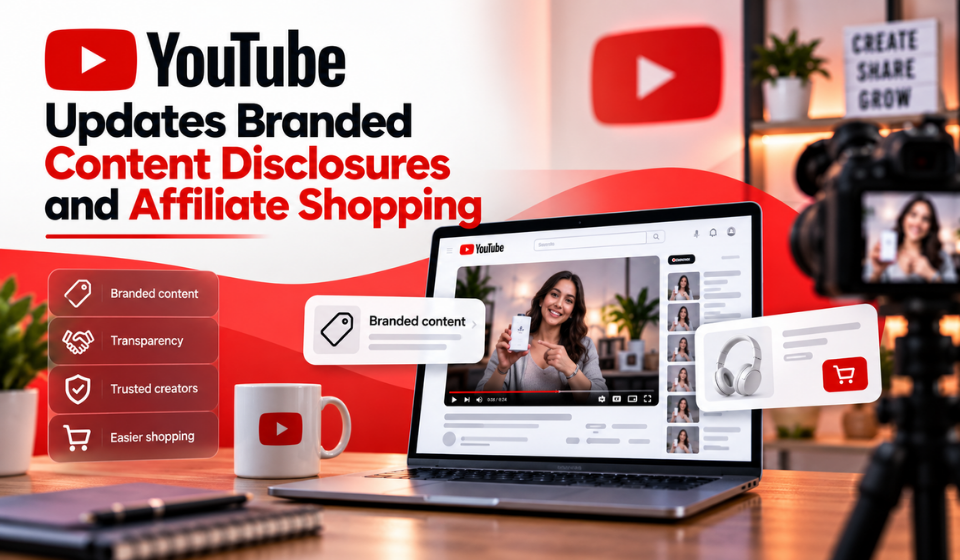
YouTube is also updating its branded-content disclosure system.
The platform is refreshing the disclosure label used for branded content to make commercial relationships clearer to viewers. It is also adding age and geographic controls that creators can use when appropriate.
These controls could be useful for creators and brands running campaigns across different markets, particularly when certain products or campaigns have regional or age-related requirements.
The changes are intended to give creators greater control over how branded content is presented while helping viewers understand when a video involves a commercial relationship.
Automated Detection of Undisclosed Branded Content
YouTube is also using automated systems to identify some branded content that was not disclosed during the upload process.
The platform says its systems may detect videos containing branded content and apply a disclosure label automatically. This could help identify some commercial content that might otherwise appear without the appropriate platform disclosure.
However, automated detection does not replace the creator’s responsibility.
Creators and brands remain responsible for following YouTube’s policies and applicable advertising and disclosure requirements in the markets where their content is available.
Amazon and YouTube Shopping
The experiment comes as YouTube continues expanding its affiliate shopping ecosystem.
YouTube has integrated Amazon products into its Shopping Affiliate programme for eligible creators in supported markets. The broader system connects creators, products and eligible retailers while giving viewers additional purchasing options.
The local retailer experiment takes this approach further by testing whether YouTube can automatically select the most appropriate eligible merchant for an individual viewer.
What It Means for Creators
For creators, local retailer matching could make affiliate shopping more flexible when their audiences are spread across different markets.
A viewer could potentially see the same creator-selected product through an eligible retailer serving their market. Updated branded-content controls could also help creators manage campaigns that require age or geographic restrictions.
However, creators should not assume that every tagged product will be matched with a local retailer or that the experiment will automatically increase affiliate revenue.
The test is intended to measure its effectiveness, so YouTube’s approach could change depending on the results.
What It Means for Brands
Brands could benefit from clearer tools for managing commercial content across different audiences.
Geographic and age controls may provide additional flexibility for campaigns with regional or audience restrictions, while updated disclosure labels can make commercial relationships easier for viewers to identify.
Transparency remains important. Creators and brands must continue to follow YouTube’s policies and applicable local advertising requirements.
FAQs
What is YouTube Affiliate Shopping?
It allows eligible creators to tag products in their content and potentially earn commissions from qualifying purchases.
What is YouTube testing with local retailers?
YouTube is testing whether the same product selected by a creator can be offered through a different eligible local retailer based on the viewer’s market.
Will local matching guarantee faster delivery?
No. YouTube has not established that the experiment will guarantee faster delivery, lower prices or other purchasing benefits.
Does it apply to Paid Product Placement?
No. The reported local retailer experiment does not apply to videos using the Paid Product Placement setting.
Can YouTube automatically disclose branded content?
YouTube says its systems may detect some undisclosed branded content and apply a disclosure label automatically. Creators remain responsible for making required disclosures.
Conclusion
YouTube is expanding its approach to creator commerce and branded content through two separate updates.
The YouTube Affiliate Shopping experiment tests whether the same creator-tagged product can be offered through an eligible local retailer for viewers in different markets. Its purpose is to determine whether local merchant selection can improve shopping performance.
At the same time, YouTube is introducing updated branded-content disclosures, age and geographic controls, and automated detection of some undisclosed commercial content.
The retailer matching system remains an experiment, so its impact on sales, conversions and creator earnings is not yet known. For creators and brands, the key takeaway is that YouTube is giving them more flexibility while maintaining responsibility for transparent commercial disclosures.