


Table of Contents
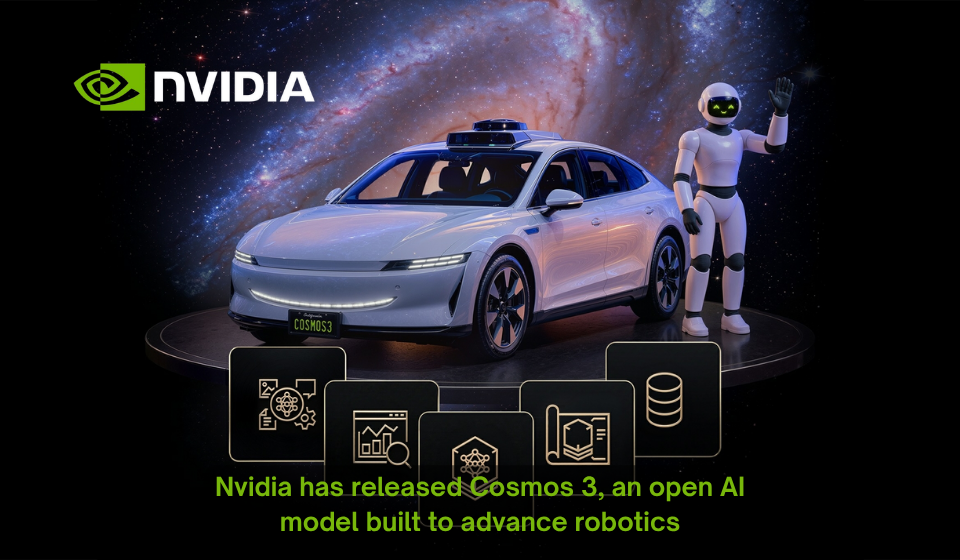
Nvidia has expanded its artificial intelligence portfolio with the launch of Cosmos 3, a new open AI model designed specifically for robotics and autonomous systems. The release highlights Nvidia’s growing focus on building foundational AI technologies that can help robots understand, learn, and interact with the physical world more effectively.
As industries increasingly adopt automation, robotics developers face challenges related to training, simulation, decision-making, and real-world deployment. Cosmos 3 aims to address these challenges by providing a flexible AI framework that can accelerate robotics innovation across manufacturing, logistics, healthcare, and research.
By making the model open and accessible, Nvidia hopes to encourage broader collaboration within the robotics ecosystem while reducing barriers to entry for developers and organizations.
What Is Nvidia Cosmos 3?
Cosmos 3 is an advanced AI model designed to support robotic intelligence by helping machines process environmental data, simulate actions, and make informed decisions.
The platform is built to work across a variety of robotic applications, enabling developers to create smarter and more adaptable autonomous systems.
Key Features of Cosmos 3
- Open AI framework for robotics
- Advanced simulation capabilities
- Real-world environment understanding
- Improved decision-making systems
- Faster robot training workflows
- Scalable deployment support
- Integration with Nvidia AI infrastructure
The model is expected to play an important role in the development of next-generation autonomous machines.
How Cosmos 3 Benefits Robotics Development
Training robots in real-world environments can be expensive, time-consuming, and sometimes unsafe. Cosmos 3 helps address these challenges by enhancing simulation-based learning and AI-driven decision-making.
Potential Benefits
- Faster robotics development cycles
- Reduced training costs
- Improved safety testing
- Better environmental awareness
- Enhanced autonomous navigation
- More accurate robotic actions
These improvements could help organizations deploy robots more efficiently across different industries.
Cosmos 3 Features at a Glance
| Feature | Benefit |
| Open AI Architecture | Greater developer accessibility |
| Robotics Simulation | Faster model training |
| Autonomous Decision-Making | Improved robot performance |
| Environmental Understanding | Better real-world adaptation |
| Scalable Infrastructure | Enterprise-ready deployment |
| AI Integration | Seamless Nvidia ecosystem support |
Industries That Could Benefit From Cosmos 3
The launch of Cosmos 3 has implications for multiple sectors where robotics adoption is growing rapidly.
Manufacturing
- Smart factory automation
- Industrial robot optimization
- Predictive maintenance
Logistics
- Warehouse automation
- Autonomous delivery systems
- Inventory management
Healthcare
- Surgical robotics
- Patient assistance systems
- Medical automation
Research and Education
- Robotics experimentation
- AI model development
- Academic innovation
As robotics becomes more sophisticated, AI models like Cosmos 3 could serve as foundational building blocks for future intelligent machines.
Why Open Robotics AI Matters
Open AI platforms often accelerate innovation by allowing developers, researchers, and businesses to collaborate on improving technologies.
Advantages of Open Robotics Models
- Faster innovation cycles
- Community-driven improvements
- Lower development barriers
- Increased transparency
- Wider industry adoption
By opening access to Cosmos 3, Nvidia may help expand the robotics ecosystem while encouraging experimentation and real-world deployment.
Key Takeaways
- Nvidia has launched Cosmos 3, an open AI model for robotics.
- The platform focuses on simulation, decision-making, and autonomous learning.
- Developers can use Cosmos 3 to accelerate robotics training and deployment.
- Industries such as manufacturing, logistics, healthcare, and research may benefit.
- The open approach could encourage wider adoption and innovation in robotics AI.
Final Thoughts
Nvidia’s launch of Cosmos 3 reflects the growing importance of artificial intelligence in robotics development. As organizations seek smarter and more capable autonomous systems, foundational AI models will become increasingly important for training, simulation, and real-world decision-making.
With its open architecture and robotics-focused capabilities, Cosmos 3 has the potential to accelerate innovation across multiple industries. While the robotics sector is still evolving, Nvidia’s latest AI initiative demonstrates how the convergence of AI and automation could shape the future of intelligent machines.