


Table of Contents
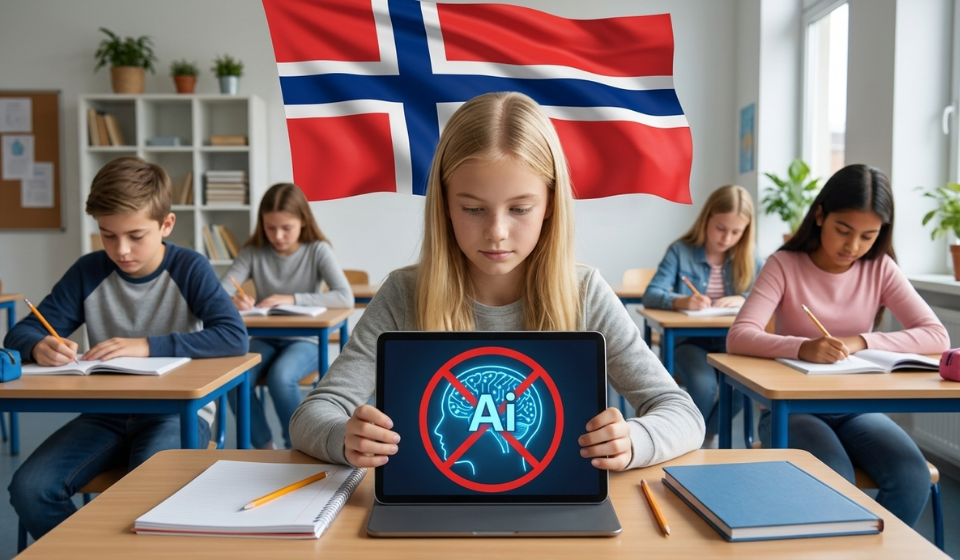
Norway has announced a significant education policy change by banning the use of artificial intelligence tools in primary schools starting from the autumn 2026 academic term. The decision reflects growing concerns about the impact of AI technologies on children’s learning, critical thinking skills, and overall educational development.
While AI continues to transform industries worldwide, Norwegian education authorities believe younger students should first develop foundational literacy, problem-solving, and analytical skills without relying heavily on AI-powered assistance.
The move positions Norway among the first countries to introduce broad restrictions on AI use in early education settings.
Why Norway Is Introducing the Ban
Government officials and education experts have raised concerns about the increasing dependence on AI tools among students.
Key Reasons Behind the Decision
- Protect critical thinking development
- Encourage independent learning
- Reduce overreliance on AI-generated answers
- Strengthen reading and writing skills
- Improve classroom engagement
- Support traditional teaching methods
Authorities argue that younger children need to build core academic skills before integrating advanced technologies into their learning process.
Major Objectives of the New Policy
The restriction is intended to maintain a healthy balance between technology and education.
Expected Goals
- Improve student concentration
- Promote creativity and original thinking
- Strengthen teacher-led instruction
- Encourage active participation
- Reduce distractions in classrooms
Education policymakers believe these measures will help students develop stronger cognitive abilities during their formative years.
Overview of Norway’s AI School Policy
| Policy Area | Details |
| Effective Date | Autumn 2026 |
| Education Level | Primary Schools |
| AI Tool Usage | Restricted |
| Main Objective | Protect foundational learning |
| Focus Areas | Literacy, critical thinking, creativity |
| Teacher Role | Increased classroom guidance |
The policy primarily targets younger students while allowing authorities to review AI integration strategies for higher education levels.
Potential Benefits of the Ban
Supporters of the decision argue that limiting AI access during early education could produce several long-term benefits.
Possible Advantages
- Better writing skills
- Improved reading comprehension
- Stronger independent problem-solving
- Increased classroom interaction
- Enhanced creativity
- More meaningful student participation
Many educators believe that foundational learning should prioritize human instruction over automated assistance.
Concerns and Criticism
Not everyone agrees with the policy. Some technology advocates argue that AI literacy is becoming an essential skill for future careers.
Common Criticisms
- Reduced exposure to emerging technologies
- Potential digital skills gap
- Slower AI adoption in education
- Missed opportunities for personalized learning
Critics suggest that responsible AI usage guidelines may be more effective than outright restrictions.
Benefits vs Challenges
| Benefits | Challenges |
| Encourages independent learning | Limits early AI exposure |
| Strengthens core academic skills | May slow digital literacy development |
| Supports critical thinking | Potential technology gap |
| Reduces AI dependency | Requires alternative teaching resources |
| Improves classroom engagement | Mixed reactions from educators |
The debate highlights the broader challenge of balancing technological innovation with educational priorities.
Global Impact on Education Policy
Norway’s decision may influence other countries evaluating the role of artificial intelligence in schools.
Areas Being Closely Watched
- Student performance outcomes
- Teacher feedback
- Classroom engagement levels
- Digital literacy development
- Long-term academic results
Education leaders worldwide are increasingly examining how AI should be integrated into learning environments without undermining essential cognitive skills.
Key Takeaways
What the Policy Means
- AI tools will be restricted in Norwegian primary schools from autumn 2026.
- The focus is on preserving critical thinking and foundational learning.
- Teachers will play a more central role in classroom instruction.
- The decision has sparked global discussions about AI’s role in education.
- Other countries may monitor Norway’s results before implementing similar measures.
Final Thoughts
Norway’s decision to ban AI tools in primary schools represents a cautious approach to educational technology. While artificial intelligence offers significant opportunities for learning and productivity, policymakers believe young students should first develop strong reading, writing, and problem-solving abilities through traditional educational methods.
As AI becomes increasingly integrated into everyday life, the effectiveness of Norway’s approach will likely be closely watched by educators, governments, and technology experts around the world. The outcome could shape future discussions about how and when artificial intelligence should be introduced into classrooms.