


Table of Contents
Meta has expanded its wearable technology lineup with several new products and features announced at Connect 2026. The company introduced the third-generation Ray-Ban Meta glasses, a new camera-free audio model, additional frame options and new AI-powered capabilities.
The latest Meta smart glasses also gain an accessibility feature for people with mild-to-moderate hearing loss. Meta is simultaneously developing its wearable AI experience with Muse, its personal AI agent. The announcements come as smart glasses continue to develop while questions around privacy and responsible use remain part of the wider conversation.
Ray-Ban Meta Gen 3 Gets Hardware Upgrades
The third-generation Ray-Ban Meta glasses start at $449 and are offered in Aviator, Zena and Wayfarer designs. Customers can choose from a range of colour and lens combinations.
Battery capacity has been improved, with the glasses offering up to nine hours of use. Meta has also added a six-microphone setup intended to improve voice interactions and reduce unwanted background noise.
The glasses continue to use a 12MP camera capable of capturing 3K video. New software features include Dynamic Photos, which gives users more flexibility when selecting moments from captured footage. Meta is also preparing Dolby Atmos spatial-audio support for its AI glasses.
Ray-Ban Meta Audio Takes a Camera-Free Approach
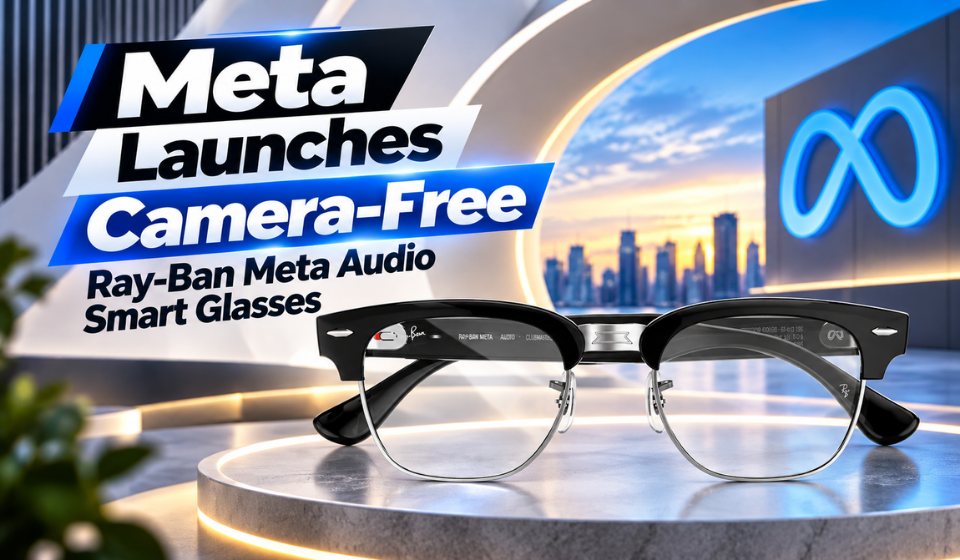
Meta has also introduced Ray-Ban Meta Audio, a new type of smart glasses that removes the camera completely.
Instead, the glasses concentrate on audio, using open-ear speakers and six microphones for music, calls and interaction with Meta AI. The design is available in Clubmaster and Burbank styles.
The glasses weigh around 43 grams and can operate for up to 12 hours on a charge. Their charging case can provide additional power for up to 48 hours. Pre-orders begin at $349, with shipments scheduled to start on October 13.
The camera-free approach gives consumers an option that does not capture images or video. However, because the glasses still contain microphones and connect to AI services, privacy considerations around audio and data remain relevant.
More Styles Join the Lineup
Meta is also broadening its eyewear selection through new designs and collaborations.
The company has partnered with K-pop artist LISA on special editions of the Meta Adventurer and Meta Capri. The LISA Edition models start at $399 and are compatible with prescription lenses.
Meta is additionally introducing a black Meta Adventurer with grey lenses and a plug-in case at $249. The model is scheduled to go on sale from October 23 in markets where Meta Glasses are available.
The growing range shows Meta’s attempt to offer different designs and price points rather than positioning its wearable products around a single style.
Muse Expands the AI Experience
AI is becoming an increasingly important part of Meta’s glasses strategy.
Meta is bringing Muse, its personal AI agent, to compatible Meta smart glasses. The assistant is designed to help users interact with information and complete certain tasks while keeping the experience hands-free.
This development could make the glasses useful for more than taking photos, listening to audio or answering simple questions. Instead, Meta is positioning them as a way to access AI assistance during everyday activities.
Hearing Enhancement Adds an Accessibility Feature
Meta is also introducing Hearing Enhancement for compatible AI glasses.
The feature is designed for adults with perceived mild-to-moderate hearing loss. It uses the glasses’ microphones to process surrounding sound and delivers enhanced audio through the built-in speakers.
Meta says the feature has received FDA authorisation in the United States. It is expected to arrive later this year and will be available for $149.99 or through Meta One on compatible devices.
This gives Meta smart glasses another potential use case beyond communication, entertainment and AI assistance.
Privacy Remains a Consideration
Privacy continues to be an important topic surrounding smart glasses.
Camera-equipped devices can record photographs and video in public environments, raising questions about consent and how people nearby are represented in captured content. Some venues have responded by restricting the use of camera-equipped smart glasses.
Ray-Ban Meta Audio removes the camera, which eliminates image and video recording from that particular device. However, its microphones mean that audio privacy and data-handling questions remain.
Claims or legal disputes concerning the handling of recorded material should also be treated as allegations or matters under review rather than established findings.
FAQs
What are Meta smart glasses?
Meta smart glasses are connected eyewear products that combine traditional glasses with technologies such as cameras, speakers, microphones and Meta AI, depending on the model.
What is new with Ray-Ban Meta Gen 3?
The third-generation model offers up to nine hours of battery life, a six-microphone system, a 12MP 3K camera and new software features.
Do Ray-Ban Meta Audio glasses have a camera?
No. Ray-Ban Meta Audio is designed without a camera and focuses on audio, calls and AI interaction.
How much do Ray-Ban Meta Audio glasses cost?
The new camera-free glasses start at $349, with shipments scheduled to begin October 13.
What is Muse?
Muse is Meta’s personal AI agent, which the company is bringing to compatible glasses to provide more hands-free AI assistance.
Does removing the camera eliminate privacy concerns?
No. While the camera-free design prevents image and video capture, microphones and AI-connected services can still raise questions about audio, consent and data handling.
Conclusion
Meta’s latest announcements show how the company is expanding its wearable technology beyond camera-equipped glasses.
The third-generation Ray-Ban Meta improves battery life, microphones and software capabilities, while Ray-Ban Meta Audio offers a camera-free alternative centred on audio and AI. New designs, the LISA collaboration and a lower-priced Adventurer model also broaden the product range.
Muse adds another layer to the Meta smart glasses experience by bringing a personal AI agent to compatible devices, while Hearing Enhancement introduces an accessibility-focused feature.
As these products become more capable, privacy and responsible use will remain important considerations. Meta’s camera-free option addresses some concerns around visual recording, but the broader discussion around microphones, AI and personal data is likely to continue.