


Table of Contents
Meta has unveiled Muse Image, its newest artificial intelligence model for image generation, marking a major step forward in the company’s creative AI ambitions. Developed by Meta Superintelligence Labs, the model is designed to transform simple ideas into detailed visuals while making image creation more accessible through Meta’s family of apps.
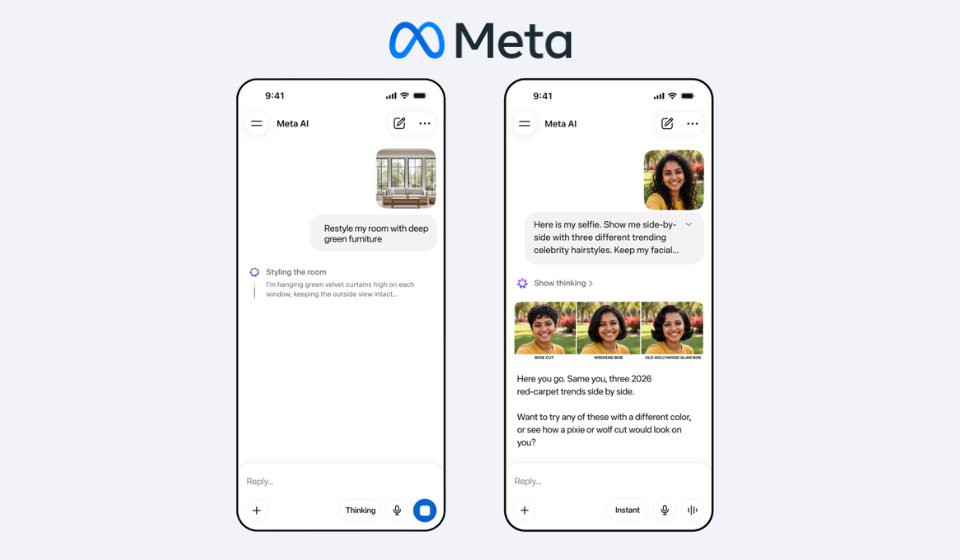
Unlike traditional image generators that rely only on text prompts, Muse Image supports multiple creative workflows. Users can generate images from written descriptions, edit existing photos, refine visuals using sketches or annotations, and create personalized content directly within Meta AI. The model is rolling out through the Meta AI app, with integration expanding across Instagram, WhatsApp, and eventually Facebook, allowing users to create and share AI-generated content without leaving their favorite applications.
Meta says Muse Image has been built to better understand complex prompts and deliver more accurate results, helping creators produce everything from artwork and invitations to social media graphics and photo edits with minimal effort.
Key Highlights
Muse Image introduces several advanced capabilities:
- Generate high-quality images from natural language prompts.
- Edit existing photos using text instructions, sketches, or annotations.
- Create personalized visuals directly inside Meta AI.
- Seamlessly share AI-generated images to Instagram, Facebook, WhatsApp, and Messenger.
- Support more detailed prompt understanding for improved image quality.
Muse Image at a Glance
| Feature | Description |
| Developer | Meta Superintelligence Labs |
| AI Capability | Text-to-image generation and image editing |
| Input Methods | Text prompts, photos, sketches, and annotations |
| Platform Availability | Meta AI, Instagram, WhatsApp, with Facebook rollout planned |
| Primary Purpose | Simplify creative image generation and editing |
Why This Launch Matters
The introduction of Muse Image reflects Meta’s strategy of embedding generative AI into products that billions of people already use. Instead of requiring a separate creative platform, users can generate and modify images directly within social networking and messaging apps, making AI-assisted creativity part of everyday digital communication.
The launch also highlights the growing competition among major technology companies developing advanced AI image generation models. As organizations continue improving prompt understanding, editing precision, and creative flexibility, users gain access to increasingly sophisticated tools for personal, professional, and commercial content creation.
At the same time, the rollout has sparked discussions around privacy and responsible AI, particularly regarding how publicly shared content may be incorporated into AI-powered creative features. Meta says users have controls to manage how their content is reused within eligible AI experiences.
Key Takeaways
- Meta has introduced Muse Image, its latest AI-powered image generation model.
- The model supports image creation, editing, and personalization through Meta AI.
- Muse Image is rolling out across Meta AI, Instagram, WhatsApp, and additional Meta platforms.
- The technology accepts text prompts, existing photos, sketches, and annotations as inputs.
- The launch strengthens Meta’s position in the rapidly evolving generative AI market.
Final Thoughts
Muse Image represents Meta’s latest effort to make AI-powered creativity more accessible by integrating advanced image generation directly into the apps people use every day. By combining intuitive editing tools, improved prompt understanding, and seamless sharing capabilities, the company is aiming to simplify visual content creation for both casual users and professional creators. As generative AI continues to evolve, tools like Muse Image are likely to play an increasingly important role in how people design, communicate, and share ideas online.