


Table of Contents
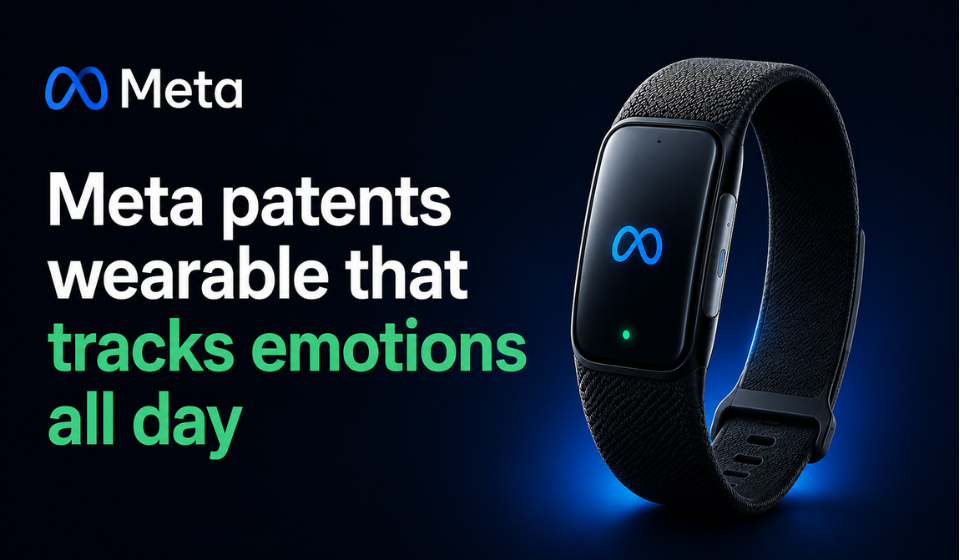
Meta has disclosed a patent describing a next-generation wearable that could use artificial intelligence to identify a person’s emotional state throughout the day. Rather than relying on a single data source, the proposed system would combine information such as speech patterns, facial expressions, body movements, daily routines, and environmental context to generate insights into a user’s mood.
According to the patent, the wearable could continuously process different behavioral signals to build a broader understanding of how a person is feeling in various situations. These insights could then be used to personalize digital experiences, recommend wellness activities, or provide context-aware assistance based on the user’s emotional condition.
Although the filing showcases an ambitious concept, Meta has not announced plans to commercialize the technology. Like many patent applications, it represents research into possible future innovations rather than confirmation of an upcoming product.
Key Highlights
Meta’s proposed wearable could introduce several AI-powered capabilities:
- Monitor emotional patterns using multiple behavioral indicators.
- Analyze speech, movement, and surrounding context together.
- Deliver personalized recommendations based on emotional insights.
- Support future health, wellness, and digital assistance features.
- Demonstrate Meta’s ongoing investment in AI-driven wearable technology.
Proposed Capabilities
| Capability | Potential Benefit |
| Emotion Recognition | Detect changes in mood using AI analysis |
| Voice Interpretation | Evaluate tone, speech patterns, and vocal cues |
| Context Awareness | Consider activities and surroundings when generating insights |
| Personalized Assistance | Deliver recommendations tailored to user behavior |
| Continuous Learning | Improve AI understanding through ongoing interaction |
Why This Patent Draws Attention
Artificial intelligence is becoming increasingly capable of understanding not only user commands but also the context in which those interactions occur. Meta’s patent suggests a future where wearable devices may respond to emotional signals alongside physical activity, creating more personalized digital experiences.
Such technology could eventually enhance areas like mental wellness, fitness coaching, and intelligent personal assistants by adapting recommendations based on a person’s changing emotional state. At the same time, systems that continuously interpret personal behavior raise important questions about privacy, transparency, and the responsible handling of sensitive information.
Since patents often describe experimental ideas, there is no guarantee that this concept will become a consumer product. However, it offers an interesting look at the types of AI-powered wearables technology companies are exploring.
Key Takeaways
- Meta has patented a wearable concept capable of recognizing emotional patterns.
- The proposed system combines voice, behavior, and contextual information.
- Potential applications include personalized wellness and intelligent assistance.
- The technology remains a research concept rather than a confirmed commercial device.
- The patent highlights the growing intersection of AI, wearable technology, and personalized computing.
Final Thoughts
Meta’s latest patent reflects the technology industry’s growing interest in creating devices that understand users on a deeper level. By combining artificial intelligence with behavioral and contextual analysis, future wearables could offer more personalized and adaptive experiences than today’s smart devices. While the concept remains at the patent stage, it highlights both the opportunities and the challenges that come with developing emotion-aware AI technologies, particularly when it comes to protecting user privacy and building trust.