


Table of Contents
Meta has announced a new set of safety enhancements for Meta AI, reinforcing its efforts to make interactions with its AI assistant more secure and responsible. The latest updates are designed to improve how the system identifies sensitive conversations, responds to potentially harmful requests, and provides users with appropriate guidance when discussing high-risk topics.
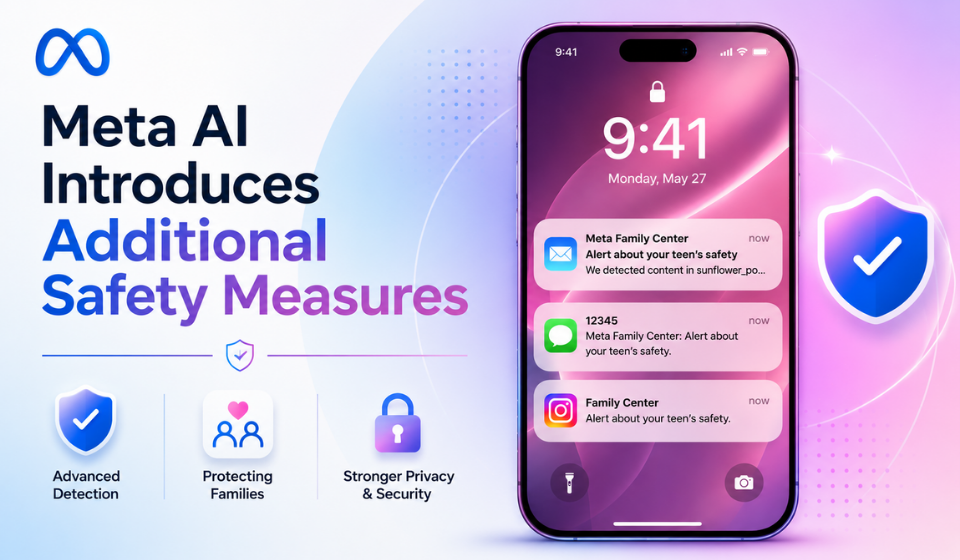
The expanded safeguards build on Meta’s existing AI safety policies by combining automated detection systems with stronger intervention mechanisms. When conversations involve subjects such as self-harm, suicide, or other serious well-being concerns, Meta AI is designed to offer supportive resources and encourage users to seek help from trusted individuals or professional services. For younger users under parental supervision, the company has also introduced additional protections that may notify parents in situations involving elevated safety risks.
The initiative reflects Meta’s broader effort to develop AI systems that balance innovation with user safety as conversational AI becomes more widely integrated across its platforms.
Key Highlights
Meta’s latest AI safety update includes several improvements:
- Enhanced detection of conversations involving potentially harmful topics.
- Stronger safeguards for users discussing self-harm or suicide.
- Additional protections for supervised teen accounts.
- AI responses designed to encourage users to seek appropriate real-world support.
- Continued investment in responsible AI development and safety technologies.
Safety Features at a Glance
| Feature | Purpose |
| Improved Risk Detection | Identifies sensitive or high-risk conversations more effectively |
| Supportive AI Responses | Directs users toward appropriate guidance and resources |
| Teen Safety Enhancements | Provides extra protections for supervised younger users |
| Parent Notifications | Alerts parents in certain high-risk situations involving supervised teens |
| Ongoing Safety Improvements | Continuously refines AI behavior to reduce potential harm |
Why These Changes Matter
As AI assistants become part of everyday communication, companies are under increasing pressure to ensure these systems respond responsibly during sensitive interactions. Conversations involving mental health, self-harm, or emotional distress require careful handling, making safety mechanisms an essential part of AI design rather than an optional feature.
Meta’s latest measures demonstrate a growing industry focus on combining advanced AI capabilities with stronger safeguards. By improving risk detection and expanding protective features, the company aims to provide more appropriate responses while encouraging users to seek assistance from trusted people or professional support when necessary.
The update also reflects a broader trend across the technology industry, where AI developers are investing more heavily in responsible deployment, user well-being, and systems that can better recognize situations requiring additional care.
Key Takeaways
- Meta has introduced new safety enhancements for Meta AI.
- The AI assistant now includes stronger protections for sensitive conversations.
- Additional safeguards have been added for supervised teen users.
- The company is focusing on improving risk detection and responsible AI behavior.
- The update reinforces Meta’s ongoing investment in building safer AI experiences.
Final Thoughts
As conversational AI becomes increasingly integrated into daily life, safety remains a critical part of its development. Meta’s latest enhancements demonstrate that building capable AI also requires investing in systems that recognize sensitive situations and respond responsibly. By strengthening its safety framework and expanding protections for vulnerable users, Meta is continuing to evolve its AI platform with a greater emphasis on user well-being and responsible innovation.