


Table of Contents
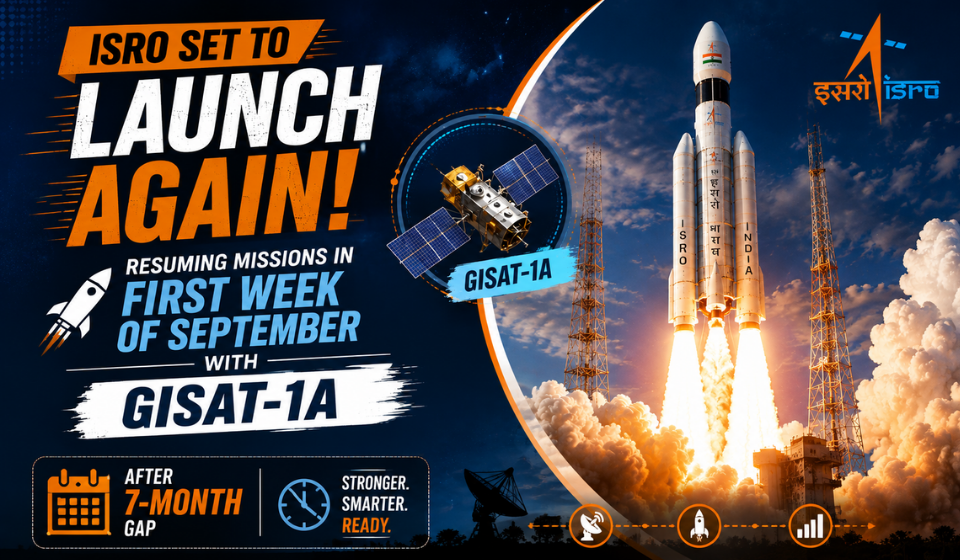
India’s space programme is preparing for an important return to flight as the Indian Space Research Organisation (ISRO) gets ready to launch the GISAT-1A Earth-observation satellite in September. The mission is expected to end a nearly seven-month gap in ISRO’s launch activities following the failure of the PSLV-C62/EOS-N1 mission in January.
According to reports, GISAT-1A, also known as EOS-05, is targeted for the first week of September and is expected to fly aboard the Geosynchronous Satellite Launch Vehicle (GSLV). The mission could mark an important step in restoring momentum to India’s launch schedule.
Why the GISAT-1A Mission Is Important
GISAT-1A is designed to provide high-frequency imaging of large areas of the Indian landmass. Its observations could support applications including agriculture, forestry, environmental monitoring and rapid assessment of natural disasters. The satellite is planned for a mission life of around 10 years.
The spacecraft is particularly significant because it is intended to restore an Earth-observation capability lost when the earlier GISAT-1, or EOS-03, mission failed in August 2021 after an issue with the rocket’s final propulsive stage.
| Mission Detail | Information |
| Satellite | GISAT-1A / EOS-05 |
| Organisation | ISRO |
| Launch vehicle | GSLV Mk II |
| Target period | September 2026 |
| Mission type | Earth observation |
| Planned mission life | About 10 years |
| Launch site | Satish Dhawan Space Centre |
A Key Test After a Challenging Period
The upcoming launch carries added importance because ISRO has experienced setbacks in its recent launch programme. The PSLV-C62/EOS-N1 mission failed on January 12, 2026, becoming the agency’s first launch attempt of the year. The prolonged pause has also placed pressure on ISRO’s ambitious mission schedule.
A successful GISAT-1A mission would therefore provide more than another satellite deployment. It would demonstrate the agency’s ability to return to regular operations while advancing several major programmes.
What Comes After GISAT-1A?
ISRO’s plans extend well beyond the September mission. The next major satellite mission is expected to involve NVS-03, part of India’s second-generation NavIC navigation constellation. Reports indicate that NVS-03 could launch in November, following GISAT-1A.
India is also preparing for missions involving the Gaganyaan human-spaceflight programme and additional launches using PSLV, GSLV and LVM3 vehicles.
With GISAT-1A, ISRO is aiming to restore an important Earth-observation capability while rebuilding confidence after a difficult start to 2026. If the September launch proceeds successfully, it could become a significant milestone for India’s space programme and set the stage for a busier series of missions in the months ahead.