


Table of Contents
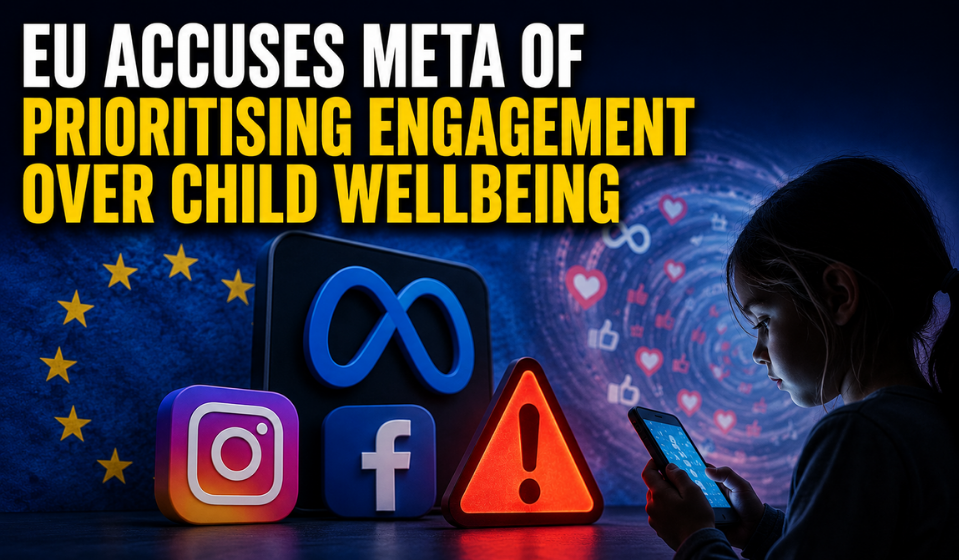
The European Union is reportedly preparing formal accusations against Meta Platforms over concerns that certain design elements on its platforms may encourage excessive user engagement, particularly among younger audiences. The move marks another significant step in the EU’s ongoing effort to create a safer digital environment under its stricter technology regulations.
According to reports, regulators believe that features used on Instagram and Facebook may be designed in ways that keep users scrolling, clicking, and interacting for extended periods. Authorities are particularly concerned about how these mechanisms could affect teenagers and children.
Key Concerns Raised by EU Regulators
Some of the platform features under scrutiny include:
- Endless scrolling feeds
- Personalized recommendation algorithms
- Frequent engagement notifications
- Reward-based interaction systems
- Content discovery mechanisms that encourage prolonged usage
Regulators argue that these design choices may contribute to unhealthy online habits and increased screen time among younger users.
What the Investigation Means
| Area of Concern | Potential Impact |
| User Wellbeing | Reduced control over screen time |
| Child Safety | Increased exposure to addictive digital behaviors |
| Platform Design | Possible requirement for product changes |
| Regulatory Compliance | Potential penalties for violations |
| Industry Standards | Could influence future social media regulations |
Why This Matters
The EU has increasingly positioned itself as a global leader in digital regulation. Recent legislation has focused on transparency, user protection, and platform accountability. If the allegations are formally pursued and upheld, Meta may be required to modify aspects of Instagram and Facebook to better align with European standards.
This case could also set a precedent for how regulators evaluate user engagement strategies across the broader social media industry. Other technology companies may face similar scrutiny if their products are found to encourage compulsive usage patterns.
Potential Outcomes
- Enhanced protections for younger users
- Greater transparency around recommendation systems
- Design changes to reduce excessive engagement
- Stricter compliance requirements for major tech firms
- Increased regulatory oversight across digital platforms
Final Thoughts
Europe’s latest challenge to Meta reflects a growing global debate about the responsibility technology companies have toward user wellbeing. While social media platforms are designed to keep people connected and engaged, regulators are increasingly questioning where the line should be drawn between engagement and dependency. As the investigation progresses, its outcome could reshape how social platforms are designed and regulated, not only in Europe but across the world.