


Table of Contents
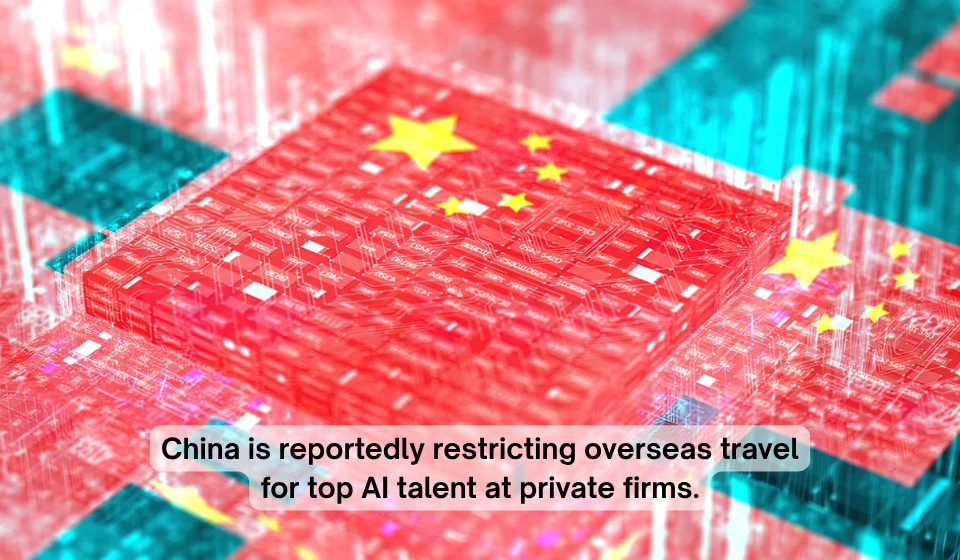
China AI Talent Travel Restrictions are reportedly creating new challenges for the country’s technology sector as authorities increase oversight of top artificial intelligence professionals working at private companies. According to recent reports, some AI researchers and executives may face tighter controls on overseas travel due to concerns surrounding strategic technologies and national competitiveness.
The move highlights the growing importance of AI development in global economic and geopolitical competition. As countries race to lead in artificial intelligence, governments are placing greater focus on protecting sensitive technologies, research expertise, and intellectual property.
Key Highlights of China AI Talent Travel Restrictions
- Increased oversight of AI professionals at private firms
- Reported limits on overseas business travel
- Focus on protecting strategic AI technologies
- Rising geopolitical competition in artificial intelligence
- Potential impact on international collaboration and research
Why China AI Talent Travel Restrictions Matter
Artificial intelligence is increasingly viewed as a critical strategic industry with implications for economic growth, cybersecurity, defense, and technological leadership. China has invested heavily in AI research and development, making its top AI engineers and scientists highly valuable assets.
Restrictions on overseas travel may be aimed at reducing risks related to talent migration, sensitive information exposure, or foreign recruitment efforts. However, such measures could also impact international collaboration, conference participation, and cross-border innovation.
For private technology firms, tighter regulations may create additional operational complexities when managing global partnerships and research initiatives.
Comparison: Open Global AI Collaboration vs Restricted AI Mobility
| Feature | Open AI Collaboration | China AI Talent Travel Restrictions |
| International Research | Broad cooperation | Limited overseas engagement |
| Talent Mobility | Flexible global movement | Increased travel oversight |
| Innovation Exchange | Faster collaboration | More controlled information flow |
| Business Expansion | Easier international partnerships | Potential operational barriers |
| Strategic Security | Lower restrictions | Stronger national protection focus |
Potential Industry Impact
The China AI Talent Travel Restrictions could influence the global AI industry by slowing international collaboration between Chinese researchers and overseas technology organizations. This may affect conferences, joint ventures, academic partnerships, and multinational AI projects.
The situation also reflects how governments worldwide are increasingly treating AI expertise as a strategic national resource similar to semiconductors, cybersecurity, and advanced manufacturing technologies.
Final Thoughts
The growing China AI Talent Travel Restrictions demonstrate how artificial intelligence has become deeply connected to national strategy and global competition. While the measures may strengthen domestic oversight and technology protection, they could also reshape how international AI collaboration and talent mobility evolve in the years ahead.