


Table of Contents
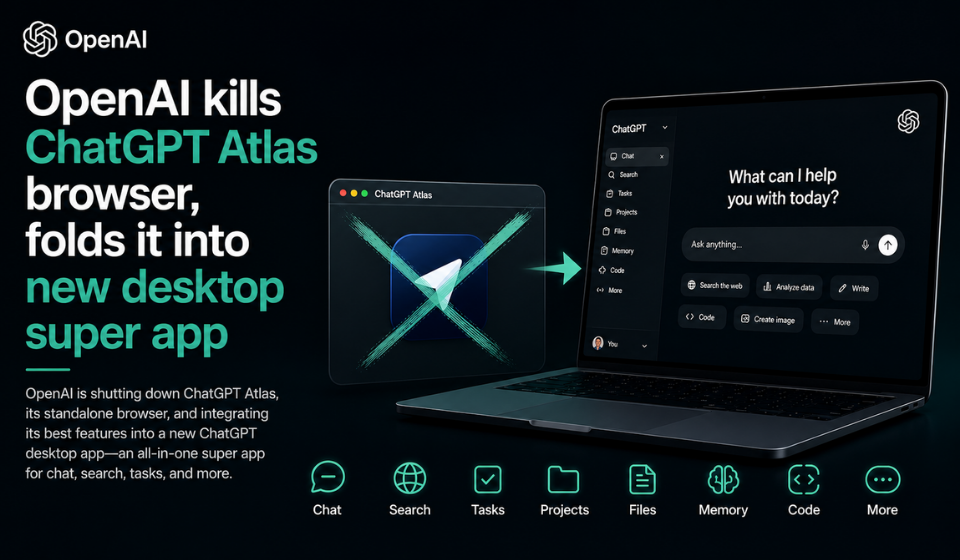
OpenAI is reshaping its desktop strategy by ending development of the standalone Atlas browser and incorporating its functionality directly into the ChatGPT desktop application. The move reflects the company’s effort to simplify how users interact with its AI services by offering a single application instead of separate tools.
With this transition, features that were previously associated with Atlas—including AI-assisted web browsing and research—will become part of the desktop version of ChatGPT. Users will no longer need to switch between applications to access conversational AI, online information, and productivity tools.
The updated desktop platform is expected to provide a more connected experience, allowing people to manage research, generate content, browse the web, and organize information from one unified workspace.
Highlights of the Update
OpenAI’s latest desktop strategy includes:
- Discontinuing the standalone Atlas browser.
- Bringing Atlas capabilities into the ChatGPT desktop application.
- Combining AI conversations, browsing, and research in one place.
- Creating a more streamlined workflow for users.
- Reducing the need to move between multiple applications.
Feature Comparison
| Feature | Atlas Browser | New ChatGPT Desktop Experience |
| Product | Independent browser | Unified desktop platform |
| Web Browsing | Dedicated browsing interface | Integrated with AI workspace |
| AI Assistance | Browser-focused | Available across the entire application |
| Productivity | Separate workflow | Centralized tools for multiple tasks |
| User Experience | Multiple applications | Single, connected environment |
Why the Change Matters
The way people use AI is changing rapidly. Rather than relying on individual applications for browsing, writing, searching, and organizing information, many users now prefer platforms that bring these capabilities together.
By folding Atlas into ChatGPT, OpenAI is responding to this shift. A unified desktop application can improve productivity by reducing interruptions and making it easier to complete different types of work within the same environment. Whether users are conducting research, drafting documents, summarizing information, or exploring online resources, the integrated experience is designed to keep everything connected.
The move also reflects a wider industry trend, with AI companies increasingly developing comprehensive digital workspaces instead of standalone tools.
Key Takeaways
- OpenAI is retiring the standalone Atlas browser.
- Atlas features will become part of the ChatGPT desktop application.
- The new desktop experience combines browsing, research, and AI assistance.
- Users can complete a wider range of tasks without changing applications.
- The update reinforces OpenAI’s focus on building an all-in-one AI productivity platform.
Final Thoughts
OpenAI’s decision to integrate Atlas into the ChatGPT desktop app marks an important step toward creating a more unified AI experience. By bringing browsing, research, and conversational intelligence together, the company is simplifying the way users interact with its technology. As AI-powered productivity tools continue to evolve, integrated platforms are likely to become the preferred choice for users seeking efficiency, convenience, and a seamless digital workflow.