


Table of Contents
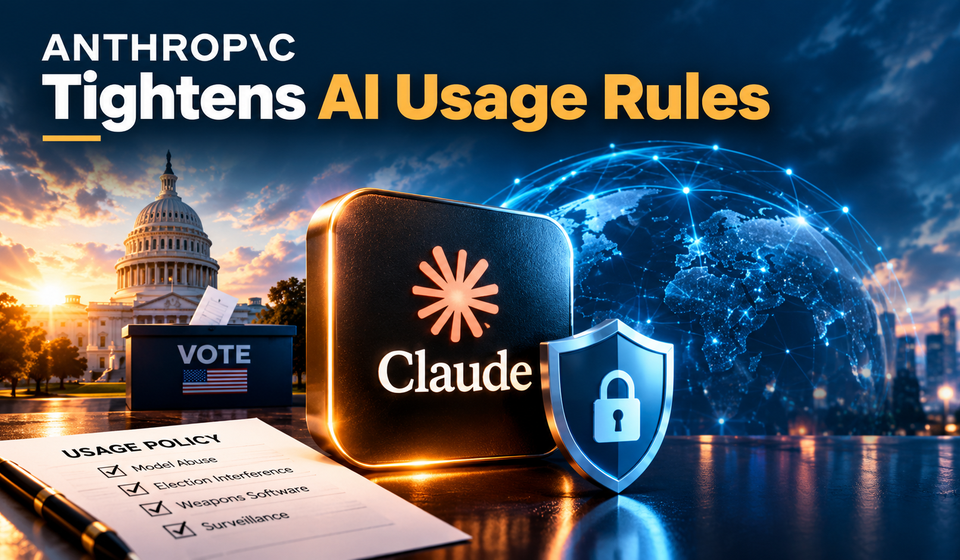
Anthropic has reworked its usage rules to tackle a number of AI-related dangers, among them election interference, surveillance, weapons-related software, and sustained verbal abuse aimed at its Claude model. The revised Anthropic usage policy spells out which activities are off-limits and makes clear that normal frustration, criticism, research, and creative expression are still allowed.
The update broadens the rules on how people may use Claude and builds on earlier adjustments to how the model handles conversations that stay persistently harmful. It also mirrors rising worry that AI tools could be used to steer public discussion, deceive voters, or enable dangerous activity.
Anthropic Usage Policy Targets Prolonged Model Abuse
One of the more unexpected additions expressly forbids prolonged verbal abuse of Claude, meaning cases where users keep treating the model cruelly with no evident purpose. Anthropic says this rule is meant for extreme cases and not for routine disagreements or difficult exchanges.
Earlier, the company changed Claude’s behavior so it could close conversations that involved persistently harmful or abusive treatment. The updated Anthropic usage policy now classifies that kind of conduct as a prohibited use as well.
Anthropic emphasizes that the limit is not meant to stop people from voicing annoyance when an answer is wrong or disappointing. Users remain free to push back on responses, probe the model’s limits, carry out research, and work with dark themes in fiction.
The distinction is important because a useful AI system must cope with criticism and tough conversations without treating each negative remark as abuse. The policy zeroes in on repeated cruelty that seems to have no meaningful point.
New Rules Address Election Interference
The revised policy also tightens limits on activities that might weaken democratic processes. Anthropic bans the use of Claude to mislead voters, disrupt elections, or back campaigns built to deceive the public.
The policy singles out deceptive operations, including fake accounts and invented news outlets. These tactics can make false claims look as though they come from independent sources, which may warp public debate.
Examples of prohibited activities include:
- Building fake personas to sway political conversation
- Setting up invented news outlets to circulate misleading claims
- Using AI to mislead voters about democratic processes
- Running coordinated deceptive campaigns at scale
- Backing efforts meant to disrupt elections
These rules echo broader fears that generative AI is making deceptive content cheaper to produce and spread. By naming these activities as banned, Anthropic is drawing lines around political and information-related uses of Claude.
Restrictions Cover Weapons Software and Surveillance
Election-related misuse is just one piece of the update. Anthropic has also formalized bans on weapons software and surveillance, fields where AI help could feed into serious harm.
The rules seek to stop people from using Claude to build or enable dangerous capabilities. The surveillance limits also deal with the danger of applying AI to track people in ways that break policy protections.
Such safeguards grow more important as AI models become able to assist with technical research, coding, data processing, and intricate planning. The same abilities that power legitimate work could be abused if protections are missing.
The Anthropic usage policy sets boundaries on these applications while leaving room for beneficial and lawful uses of AI. Its real-world effect will hinge on how the company reads the rules, spots violations, and enforces them consistently.
Why Anthropic Is Clarifying Its AI Rules
The changes come as Anthropic has held discussions with religious scholars about Claude’s moral status and the possibility of consciousness. Those conversations have drawn attention to the ways people perceive and engage with advanced AI systems.
Still, the company’s policy does not claim that Claude is conscious or has a soul. Rather, the abuse provision sets a limit on user behavior in particular, extreme situations.
The update also answers wider challenges facing AI developers. Models can produce persuasive text, automate repetitive work, and enable communication at huge scale. Those strengths create risks when they are put to use for impersonation, election manipulation, or other harmful aims.
Clear usage rules help users understand what is acceptable and give companies a framework for dealing with misuse. At the same time, the rules must be applied thoughtfully so they do not needlessly restrict legitimate criticism, security research, or creative work.
FAQs About the Anthropic Usage Policy
What changed in Anthropic’s usage policy?
The updated policy explicitly bans prolonged verbal abuse of Claude and tightens limits on election interference, deceptive campaigns, weapons software, and surveillance.
Can users criticize Claude or challenge its answers?
Yes. According to Anthropic, ordinary frustration, pushback, model testing, research, and dark creative themes fall outside the prolonged-abuse restriction.
Does the policy ban election-related AI use entirely?
No. It aims at deceptive or disruptive activities, such as misleading voters, running fake accounts, and operating invented news outlets.
Why did Anthropic address model abuse?
The company says the ban covers extreme cases of repeated cruelty toward models with no discernible purpose, extending earlier changes to Claude’s conversational behavior.
Does the update prove Claude is conscious?
No. The change does not establish consciousness or moral status; it simply sets rules for how users may interact with the model.
Conclusion
Anthropic’s updated usage policy lays down clearer limits for interactions with Claude and for activities that could damage public trust or safety. Its ban on prolonged model abuse is uncommon, but the company says it is narrowly aimed at extreme conduct and not ordinary criticism.
The tougher restrictions on election interference, deceptive campaigns, weapons software, and surveillance deal with more familiar AI safety worries. In the end, how well the Anthropic usage policy works will depend on transparent enforcement, consistent interpretation, and safeguarding legitimate research and expression while curbing harmful uses.