


Table of Contents
Online search is changing as artificial intelligence transforms how people discover information, compare products, and make purchasing decisions. Instead of entering short keywords and browsing multiple websites, users can now ask detailed questions and receive AI-generated responses directly in search results. This shift is also creating new opportunities for advertisers.
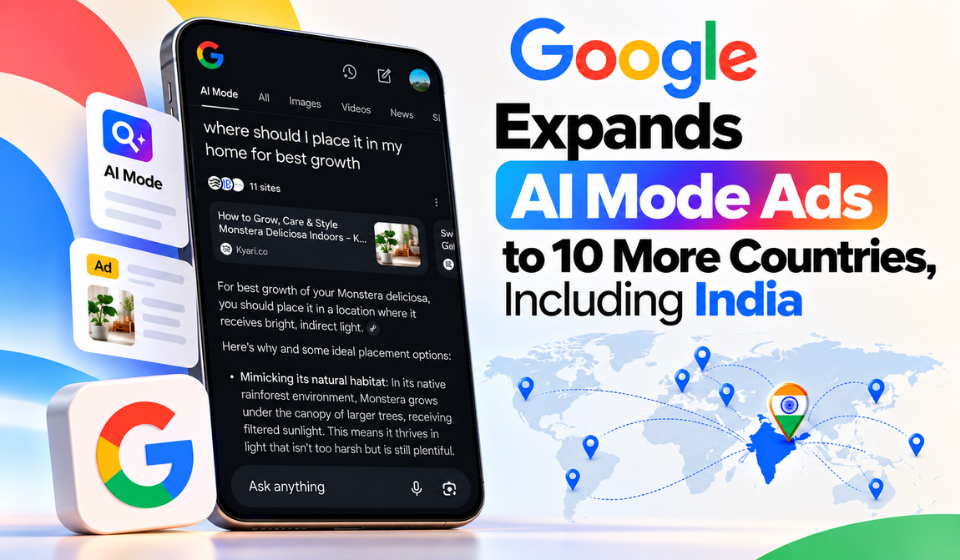
Google is expanding its advertising capabilities across its AI-powered search experiences, bringing sponsored placements to additional markets, including India and Canada.
The expansion highlights Google’s efforts to connect businesses with consumers who use conversational search to explore products and services. For advertisers, it introduces another potential way to reach customers. For users, it changes how promotional content may appear during online searches.
Understanding Google’s AI Advertising Expansion
Google offers two AI-powered search experiences that are changing the traditional search process: AI Overviews and AI Mode.
AI Overviews provide AI-generated summaries near the top of search results. They help users understand a topic quickly and explore relevant information without immediately visiting several websites.
AI Mode offers a more conversational experience. Users can ask follow-up questions, explore different options, and refine their searches through an ongoing interaction.
The expansion of AI mode Google ads brings advertising opportunities into these evolving search experiences. While sponsored placements have appeared alongside AI-generated summaries, the introduction of advertisements within conversational search creates another opportunity for businesses to reach potential customers.
For example, someone searching for suitable laptops for university might ask about battery life, performance, and price. Advertising can potentially connect that person with relevant products while they compare available options.
However, advertisements remain distinct from organic search results, and users should consider their individual requirements before making purchasing decisions.
Why Google Is Bringing Ads Into AI Search
Several factors help explain why Google is expanding advertising across its AI experiences.
1. Search Behavior Is Becoming More Conversational
Users increasingly describe their needs through detailed questions instead of relying exclusively on short search phrases. These queries can reveal specific interests, preferences, and purchasing intentions, creating opportunities for relevant advertising.
2. Google Wants to Maintain Advertising Revenue
AI-generated answers can help users find information without visiting multiple websites. This changes the traditional relationship between search results and advertising. Developing suitable advertising formats allows Google to explore commercial opportunities within its AI experiences.
3. Advertisers Need New Ways to Reach Customers
Businesses want to connect with potential buyers wherever they research products or evaluate services. Advertising within AI-powered search may offer another way to reach users during these decision-making moments.
Google has also discussed the relevance and engagement of its AI advertising experiences. However, advertisers should evaluate these claims alongside their own campaign performance rather than assuming that the new placements will automatically deliver better results.
What AI Mode Google Ads Mean for Advertisers
The expansion could create opportunities for businesses that already use Google’s advertising ecosystem. AI-powered search advertising may help companies reach potential customers while they explore products, compare alternatives, and consider purchasing decisions.
For example, an online retailer could benefit from reaching shoppers researching a particular product, while a service provider might connect with people looking for solutions to specific problems.
Advertisers should focus on the quality of their campaigns and the experience they provide to potential customers. Relevant messaging, accurate product information, and useful landing pages can help businesses make a stronger impression.
Careful performance monitoring is equally important. Businesses should review conversions, cost per acquisition, click-through rates, and return on advertising spend where the relevant data is available.
Rather than increasing budgets immediately, companies can assess their existing results and make adjustments based on measurable performance.
Why the Expansion Matters for Businesses in India and Canada
India presents an important opportunity because businesses serve a large and diverse online audience. E-commerce stores, educational institutions, travel companies, and local service providers can benefit from understanding how AI-assisted discovery influences customer decisions.
For small businesses in cities such as Chennai, Coimbatore, and Hyderabad, relevance remains essential. Product descriptions, service pages, pricing information, and advertisements should directly address the needs of potential customers.
Canada also offers opportunities for businesses operating in competitive online markets. Consumers researching home services, technology products, travel options, and other purchases may use conversational search to compare alternatives.
In both markets, businesses should focus on providing accurate information and useful landing pages rather than assuming that new advertising formats automatically guarantee visibility or sales.
How Businesses Can Prepare for AI-Powered Search Ads
Companies can take several practical steps to prepare for the growing role of AI in search advertising.
1. Keep Product Information Accurate: Ensure that product titles, prices, images, availability, and descriptions are consistent across advertising materials and landing pages.
2. Create Helpful Website Content: Address common customer questions with clear explanations, useful comparisons, and relevant information. Content should serve visitors rather than simply repeat keywords.
3. Improve Landing Page Experience: Make websites mobile-friendly, fast-loading, and easy to navigate. Display important details such as pricing, service information, and contact options clearly.
4. Monitor Campaign Performance: Track relevant advertising metrics and compare results over time. Use available data to determine whether campaign adjustments improve business outcomes.
5. Maintain Trust and Transparency: Ensure advertising claims accurately reflect the products or services offered. Clear information helps customers make informed decisions and supports long-term credibility.
Frequently Asked Questions
1. What are AI Mode Google ads?
AI Mode Google ads are sponsored advertising placements associated with Google’s AI-powered search experiences. They give businesses another potential way to connect with people researching products and services.
2. How can AI-powered search ads benefit businesses?
These ads can help businesses reach potential customers while they explore options, compare products, and look for solutions to specific needs.
3. Why is AI-powered advertising becoming important?
As search behavior evolves, people increasingly use conversational tools to discover information. Businesses can adapt their marketing strategies to remain relevant as these experiences become more common.
4. How can advertisers improve their results?
Advertisers can focus on accurate product information, relevant messaging, helpful landing pages, and regular reviews of campaign performance.
Conclusion
Google’s expansion of AI-powered advertising into additional markets marks another development in the evolution of online search. As conversational experiences become more prominent, businesses have new opportunities to connect with customers who are researching products, comparing services, and evaluating their options.
For advertisers, the best approach is to maintain accurate product information, create helpful landing pages, and evaluate campaign performance using available data. Although AI-powered placements may introduce new opportunities, their effectiveness will depend on relevance, competition, and the quality of the overall customer experience.
As search continues to evolve, businesses that adapt their advertising strategies thoughtfully and prioritize customer needs will be better prepared to navigate the changing digital marketing landscape.