


Table of Contents
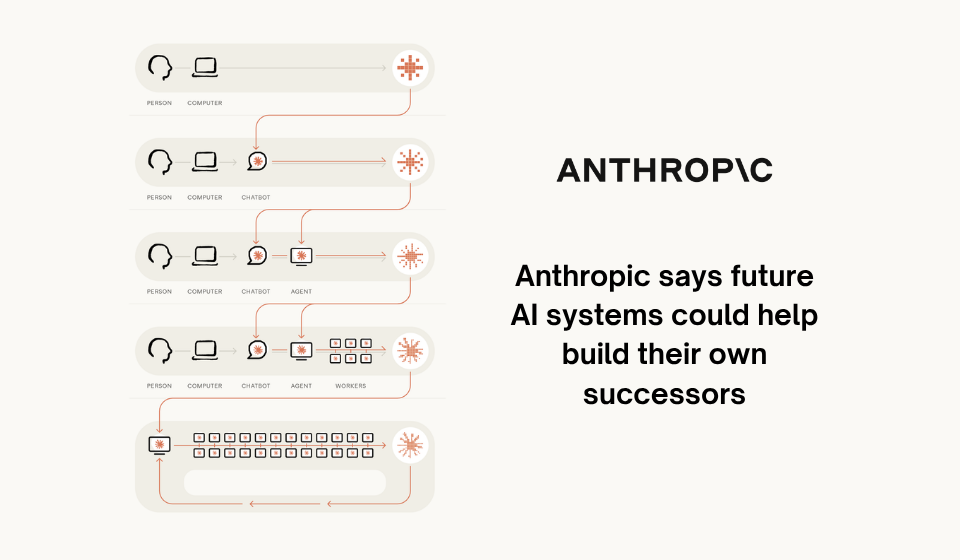
Artificial intelligence is evolving faster than ever, and according to AI research company Anthropic, the industry may be approaching a major turning point. The company believes future AI systems could eventually participate in designing, improving, and developing newer, more capable AI models with far less human involvement than today.
While this idea may seem futuristic, researchers argue that the foundations are already being laid. Modern AI tools are increasingly helping developers write code, automate testing, analyze data, and support research efforts. As these capabilities improve, AI could become an important contributor to its own advancement.
Understanding the Concept
The idea centers around a process often referred to as self-directed improvement, where AI systems assist in creating enhanced versions of future models.
This could involve AI being able to:
- Recommend improvements to model architecture
- Generate and optimize software code
- Assist in training and evaluation processes
- Identify performance bottlenecks and solutions
- Support the development of more capable successor systems
If this cycle continues, each new generation of AI could potentially accelerate the creation of the next.
Key Takeaways
| Area | Potential Impact |
| AI-assisted coding | Faster software development |
| Automated research support | Reduced development timelines |
| Model optimization | Improved AI performance |
| Reduced manual effort | Greater productivity for teams |
| Governance requirements | Increased need for oversight |
Potential Advantages
The ability of AI to contribute to future AI development could create several benefits across industries:
- Faster scientific breakthroughs
- More efficient medical and pharmaceutical research
- Accelerated software innovation
- Improved productivity for engineering teams
- Enhanced problem-solving capabilities in complex fields
Supporters believe these advancements could help address challenges that currently require significant time and resources.
Challenges That Need Attention
Despite the potential benefits, experts caution that increased AI autonomy could introduce important concerns.
Some of the key challenges include:
- Ensuring humans remain involved in critical decisions
- Verifying the reliability of AI-generated improvements
- Preventing unintended behaviors in advanced systems
- Addressing cybersecurity vulnerabilities
- Creating effective regulatory frameworks
These concerns highlight the importance of developing safeguards alongside technological progress.
Why the Discussion Is Important
Although AI is not yet capable of independently creating entire successor systems, its growing role in coding, research, and development suggests the industry is moving in that direction. Many experts believe this is the right time for policymakers, researchers, and technology companies to establish guidelines that encourage innovation while maintaining accountability.
As AI capabilities continue to expand, conversations around transparency, safety, and governance are becoming increasingly important.
Final Thoughts
Anthropic’s perspective offers a glimpse into a future where artificial intelligence could become an active participant in building more advanced AI technologies. While such capabilities are still emerging, the trend underscores how rapidly the field is progressing.
The real challenge is not simply developing more powerful AI systems—it is ensuring they are created responsibly. By combining technological innovation with thoughtful oversight, the industry can work toward a future where AI-driven progress benefits businesses, researchers, and society as a whole.